Triveni Pond — Let The Pond Breathe Again
A 200 KLD nature-based wastewater treatment plant, commissioned in January 2025, has turned a wastewater-choked village pond into a functioning ecological water body — an 88% cut in BOD, a 1.39m rise in groundwater, and more than 40 species of fauna recorded across 2025.
- 200KLDWastewater treatment capacity
- 88%BOD reduction since 2023
- 1.39mGroundwater level rise
- 40speciesFauna recorded in 2025
- 6.03tonsCO₂ sequestered in 2025
- 25K+/yrAnnual community footfall
Background
A community pond turned into Bhokarka's biggest pollution sink
Triveni Pond, in Bhokarka village (Pataudi Block, Gurugram District), is a community-owned water body that historically served as a traditional pond for water security, livestock needs and ecological balance. For several years it faced acute degradation from continuous untreated wastewater inflow and poor local drainage.
The pond had become a major sink for pollution, receiving approximately 40% of the village's wastewater — around 200 KLD. The untreated inflows included domestic sewage and other effluent loads, leading to accumulation of organic sludge, foul smell and a decline in ecological health.
The village's groundwater level was also critically low, at roughly 118 feet below ground level. The polluted pond risked contaminating the water table further, while solid waste dumping around the edges weakened the pond ecosystem and degraded the public environment around it.
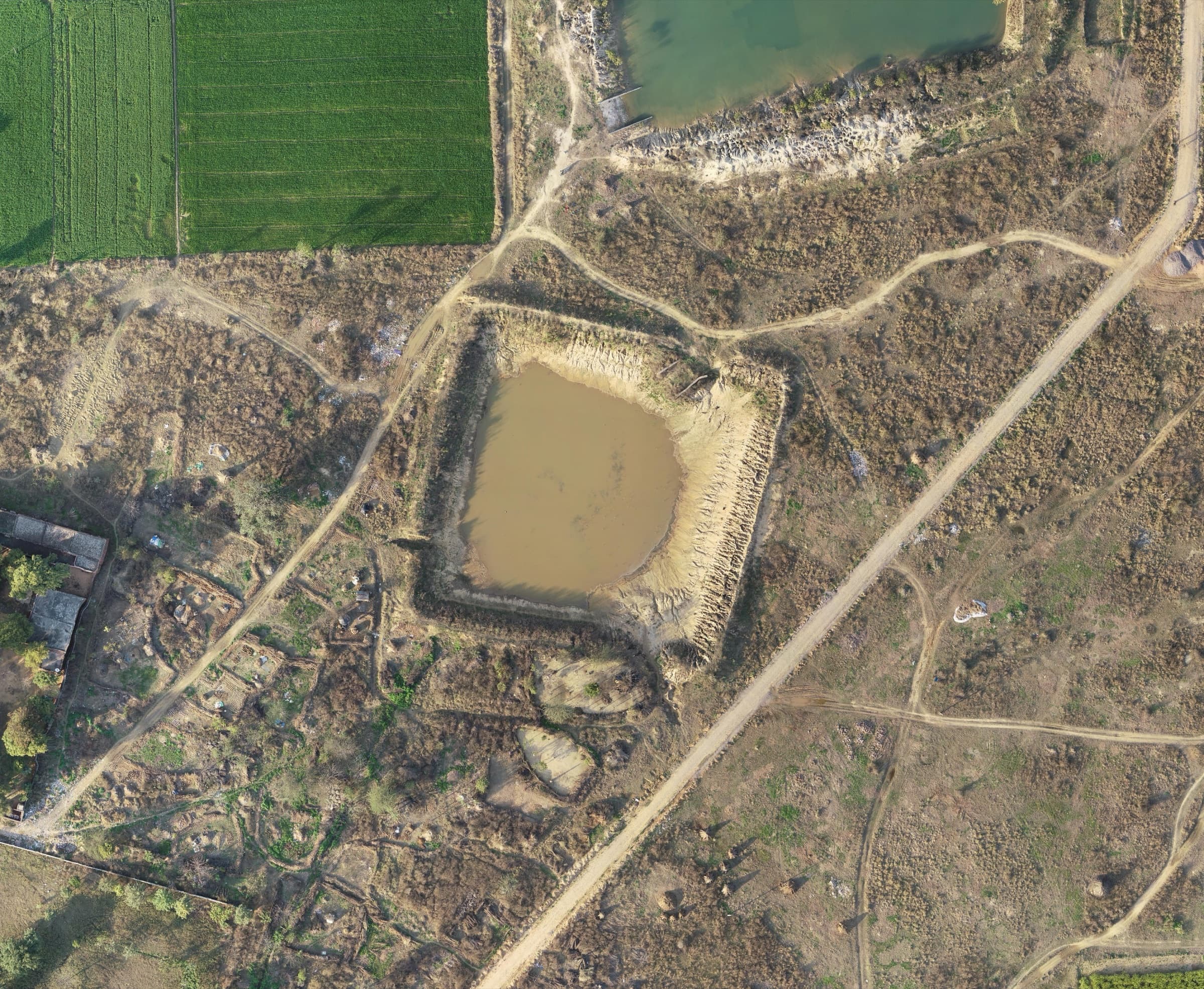
Aerial drone view
Dewatered, desilted pond bed during restoration works
The site
A natural pond at the heart of Bhokarka
The project sits in Bhokarka village, Pataudi Block, Gurugram District, Haryana, at 28.277031°N latitude and 76.793343°E longitude. Triveni Pond is a natural, community-owned water body of roughly 1.5 acres, owned by the Gram Panchayat, with a catchment of residential and agricultural land feeding it through rainwater runoff and domestic wastewater.
The pond is centrally positioned within the settlement, making it strategically important for groundwater recharge and community development — with the entire village population, plus the neighbouring villages of Turkapur and Bas Paddamka, counted among its beneficiaries.
Site at a glance
- Village
- Bhokarka
- Block
- Pataudi
- District
- Gurugram
- State
- Haryana
- Ownership
- Gram Panchayat
- Coordinates
- 28.277031°N, 76.793343°E
The need
Six challenges identified at the site
- Continuous inflow of untreated wastewater (~200 KLD).
- High risk of groundwater contamination.
- Poor drainage, leading to stagnation and flooding issues.
- Solid waste dumping around pond edges.
- Declining ecological value and reduced community connection.
- Limited ownership and governance systems for long-term protection.
Without timely intervention, the pond risked turning into a stagnant wastewater storage area, causing environmental degradation and potential health hazards.
Project vision
A nature-based treatment system, and a pond people want to visit
- Develop a wastewater treatment plant using a nature-based solution (200 KLD WWTP).
- Develop a community space with landscape elements to re-establish the community's relationship with the pond.
- Plant for healthy pond ecology — promoting flora and fauna to improve soil quality and groundwater recharge.
Technical interventions
A nature-based WWTP, commissioned and running since January 2025
The 200 KLD wastewater treatment plant started functioning in January 2025 — treating wastewater continuously before it reaches the pond, and shifting Triveni Pond from a polluted sink to a functional ecological water body. Regular operation and maintenance through 2025 kept the system performing and the pond improving.
- 01
Nature-based WWTP (200 KLD)
Commissioned in January 2025. Continuously treats domestic wastewater and other effluent before it reaches the pond.
- 02
Screen Chamber
Cleaned regularly to remove floating and coarse solids, preventing blockages and reducing overflow risk.
- 03
Constructed Wetland
Wetland plants trimmed regularly for airflow, sunlight penetration and nutrient uptake — the biological core of the treatment system.
- 04
Overflow Drain
Built from the screen chamber to the pond to safely carry excess flow during monsoon and prevent erosion around the treatment units.
- 05
Bio-dozing
Reduces accumulated organic sludge, improves dissolved oxygen and strengthens the pond's own self-purification.
Ecological profile
40 species recorded in the 2025 survey
The Bhokarka site is in its early-to-mid successional stage, gradually shifting into a multi-layered habitat — a 2025 ecological survey recorded 27 bird species, 9 reptile species and 4 butterfly species alongside a structured plantation programme now in its second growing season.
Successional flora
A tree canopy forming naturally
- Acacia senegal
- Cordia myxa
- Albizia odoratissima
- Ficus virens
2025 plantation growth
- Moringa
- Amla
- Jamun
- Pilkhan
- Kadam
- Lesua
- Dhak
- Kachnar
- Alstonia
- Nimbu
- Phalsa
- Jasmine
- Hibiscus
- Kaner
- Jatropa
- Chandni
Highest growth this year came from Moringa (6 feet across 30 individuals) and Amla (2 feet across 24 individuals). Grasses stabilising soil — Cenchrus ciliaris, Eragrostis, Dactyloctenium aegyptium — and regenerating herbs — Leucas, Trianthema, Boerhavia diffusa — round out the site's natural regeneration.
40 species recorded
Birds, reptiles and butterflies returning to the pond
- 27Bird species
- 9Reptile species
- 4Butterfly species
Highlight sightings
- Scaly-breasted Munia
- Knob-billed Duck
- Pied Bushchat
- Common Tailorbird
- Indian Flapshell Turtle
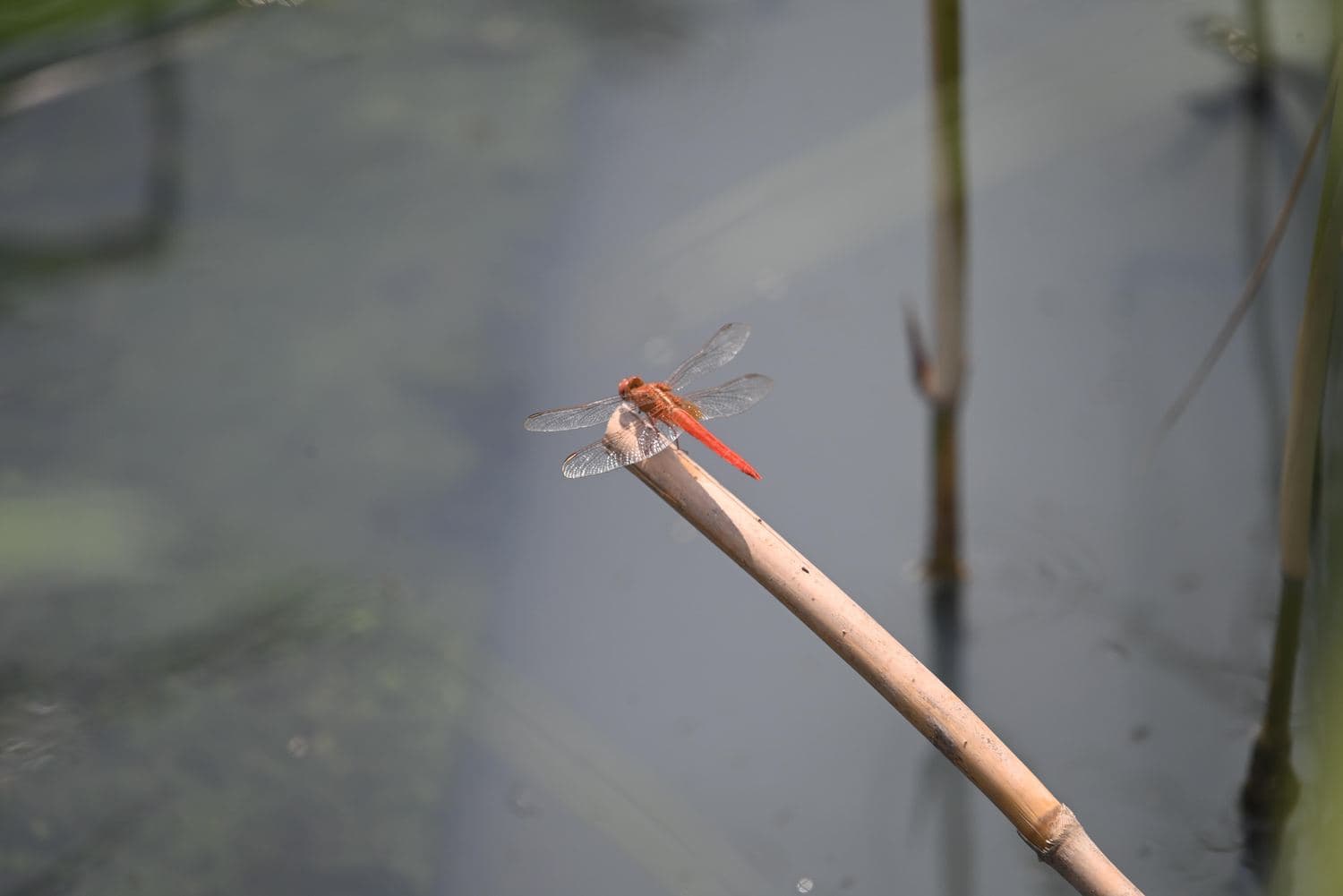
- Scarlet Skimmer
- Common Hoopoe
- Red-wattled Lapwing
- Lime Butterfly
Seasonal water retention now supports wetland birds (lapwings, ducks, egrets), semi-aquatic reptiles (flapshell turtles, keelbacks) and amphibians (Indus Valley bullfrog, skittering frog) — micro-habitats that strengthen nutrient cycling and biodiversity.
Carbon sequestration, 2025
6.03 tons CO₂
- 397.46kg CO₂Trees
- 65.02kg CO₂Shrubs
- 5,569.49kg CO₂Grass (0.5 acre)
2025 project updates
Eight activities, carried through the 2025 operating year
- Stable operation of the 200 KLD WWTP through 2025, with regular O&M.
- Screen chamber cleaned regularly to prevent blockages.
- Constructed wetland plants trimmed for airflow, light and nutrient uptake.
- Water sampling and testing carried out through the year (latest results: 17 December 2025).
- Overflow drain built from the screen chamber to the pond.
- Bio-dozing carried out to reduce sludge and improve dissolved oxygen.
- Benches installed, and fencing and the cattle ramp repainted for community use.
- Nursery prepared, with regular watering, manuring, grass-cutting and sapling replacement.
Visual vignettes
See the restoration in motion
Two aerial clips from the Bhokarka site — the algae-choked pond before intervention, and the restored environmental park that replaced it. Each clip plays automatically when it scrolls into view.
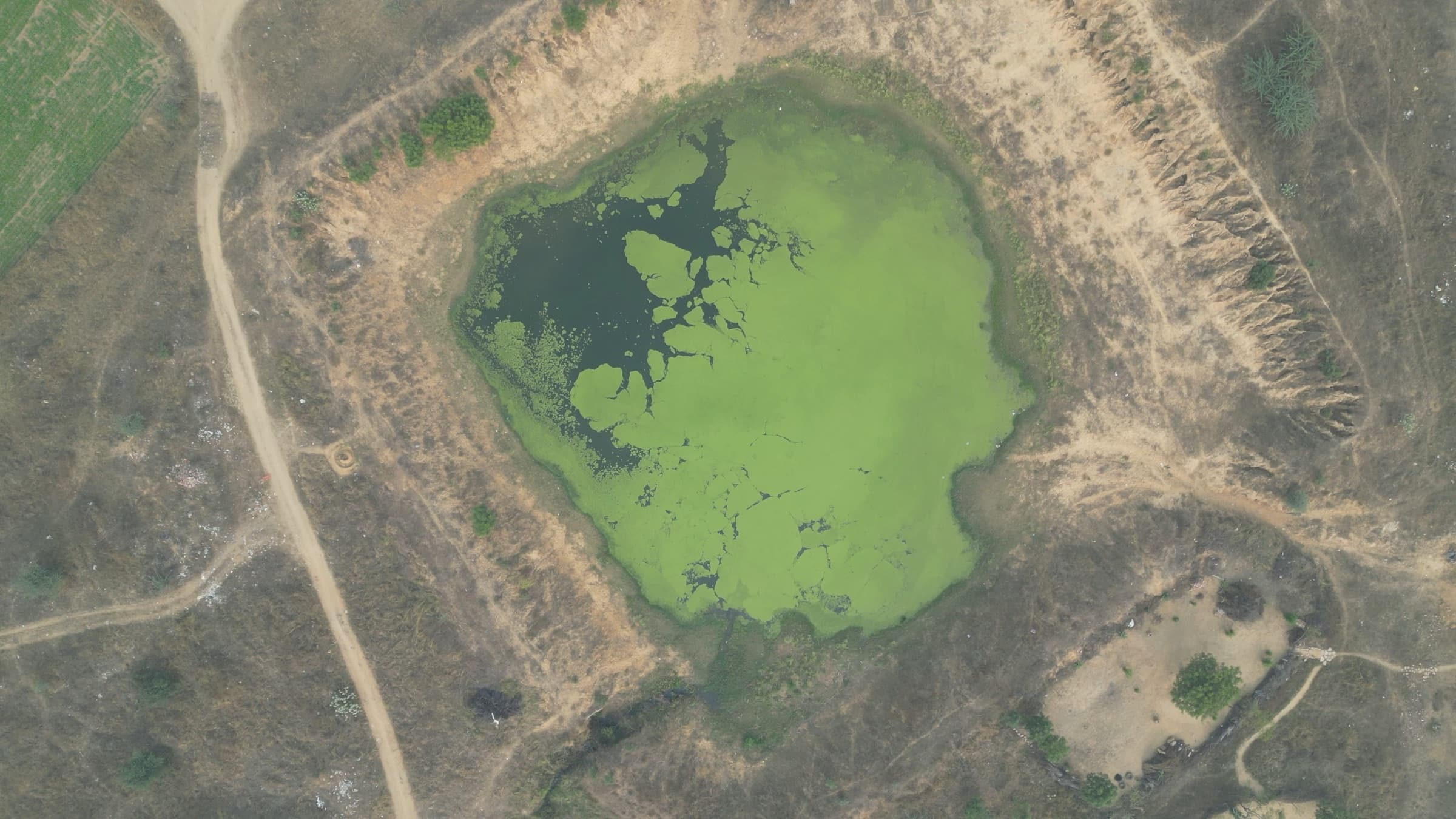
The pond before restoration
An algae-choked pond, starved of oxygen and groundwater function.
An aerial survey of the Bhokarka pond before intervention — a thick algal bloom smothers the surface, the visible signature of untreated wastewater inflow, silt build-up and nutrient overload that had all but shut down the pond's ecological and hydrological function.
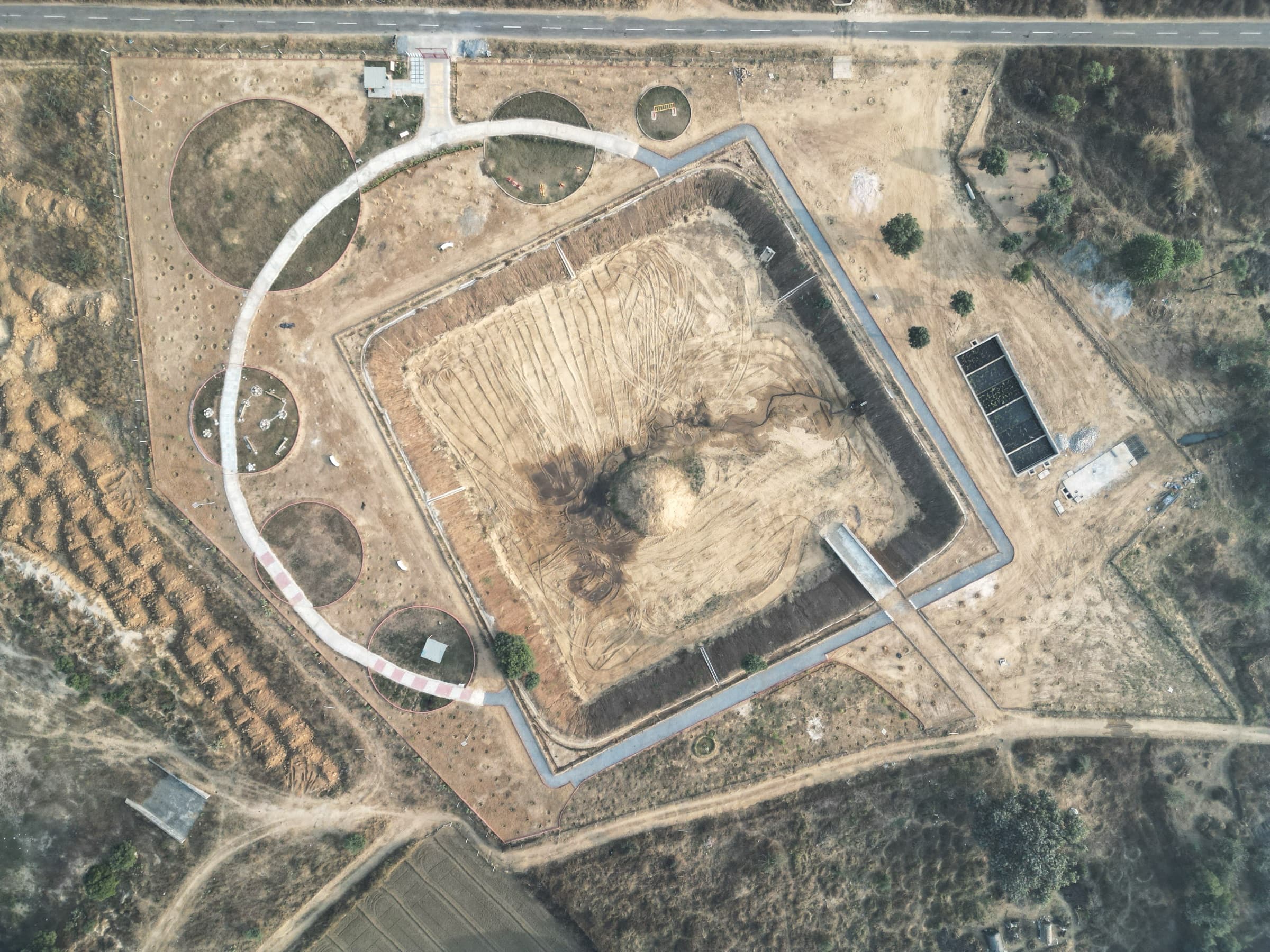
The restored environmental park
A looped pathway and reflection circles ring the revived pond.
A paved loop path, log-and-stone seating circles and gateway markers now wrap the pond perimeter — the open expanse the community chose to turn into an environmental park, a place for solace and communion with nature rather than a wastewater sink.
Community engagement & governance
Mobilising Bhokarka around its own pond
Our team works closely with the Panchayat, forms Amrit Sewa Samoohs, and holds regular engagements with youth clubs, sports groups and the Mahila Mandal to build ownership and awareness of water conservation and local water bodies.
- 01
Jal Pe Charcha
Community meetings on water conservation held with residents, including a dedicated session with the women of Bhokarka.
- 02
Composting Workshop
A hands-on session teaching households practical composting and solid-waste management.
- 03
Interactive Activity with Children
Engaging local children in play-based water and environment awareness.
- 04
Plantation & De-weeding Drive
Community members joined hands to improve green cover, ensure sapling survival and clear invasive weeds around the pond.
- 05
Women's Awareness Workshop
A behaviour-change workshop on household toxins, their impact on water and health, and practical lifestyle changes to reduce contamination.
- 06
Employee Volunteer Program
45+ Suntory Global Spirits employees and 15+ community members ran a guided pond walk, painted 3 water-conservation awareness boards, and planted 45 saplings from 150 prepared grow bags.
“We are grateful to GuruJal and Suntory Global Spirits for transforming our degraded land into a beautiful pond. It has revived the area and created a space that connects people with nature and community pride.”
Mr. Ajay Yadav — Amrit Sewa Samooh Member, Bhokarka
 BeforeAfter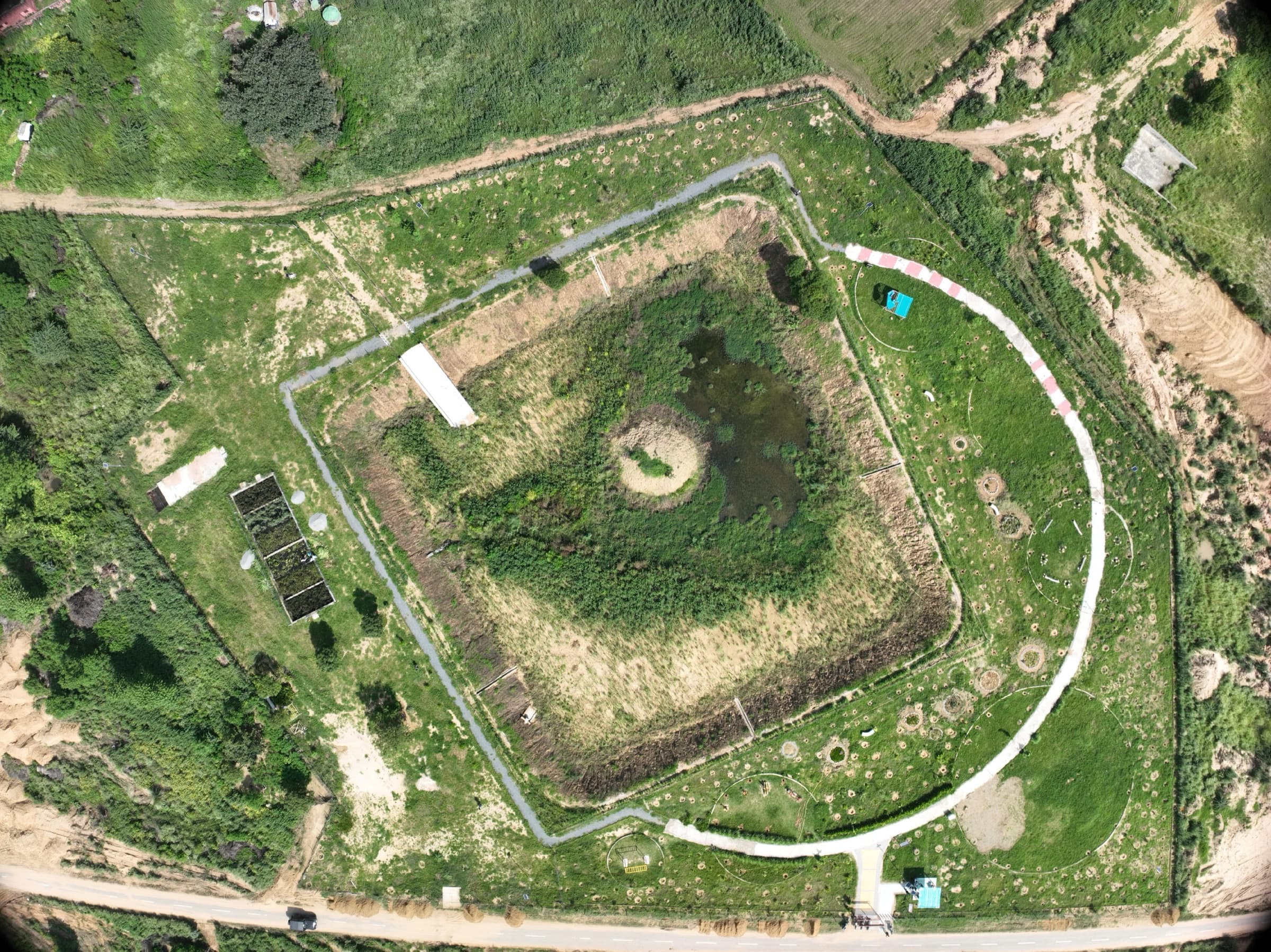
Site images
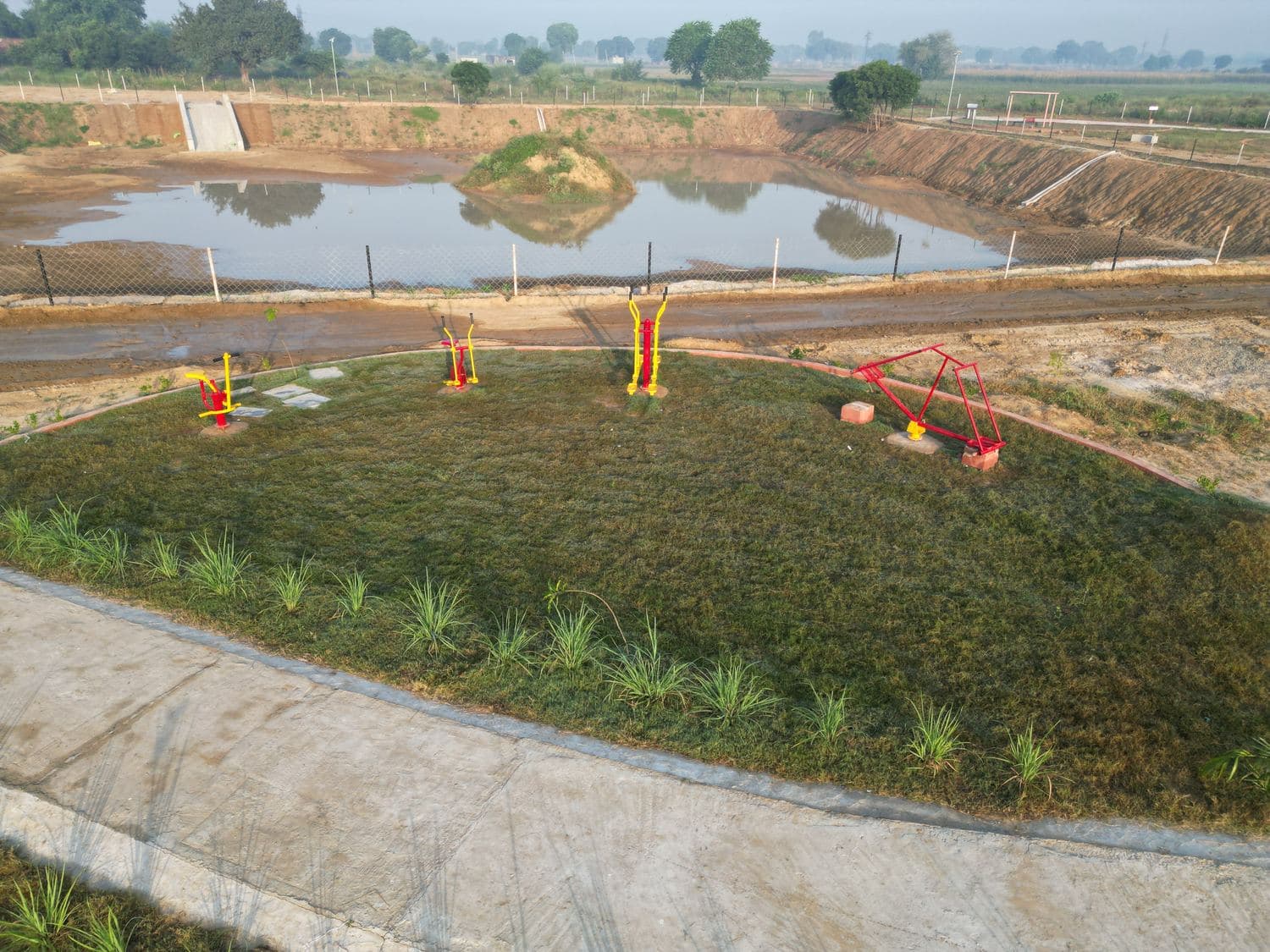
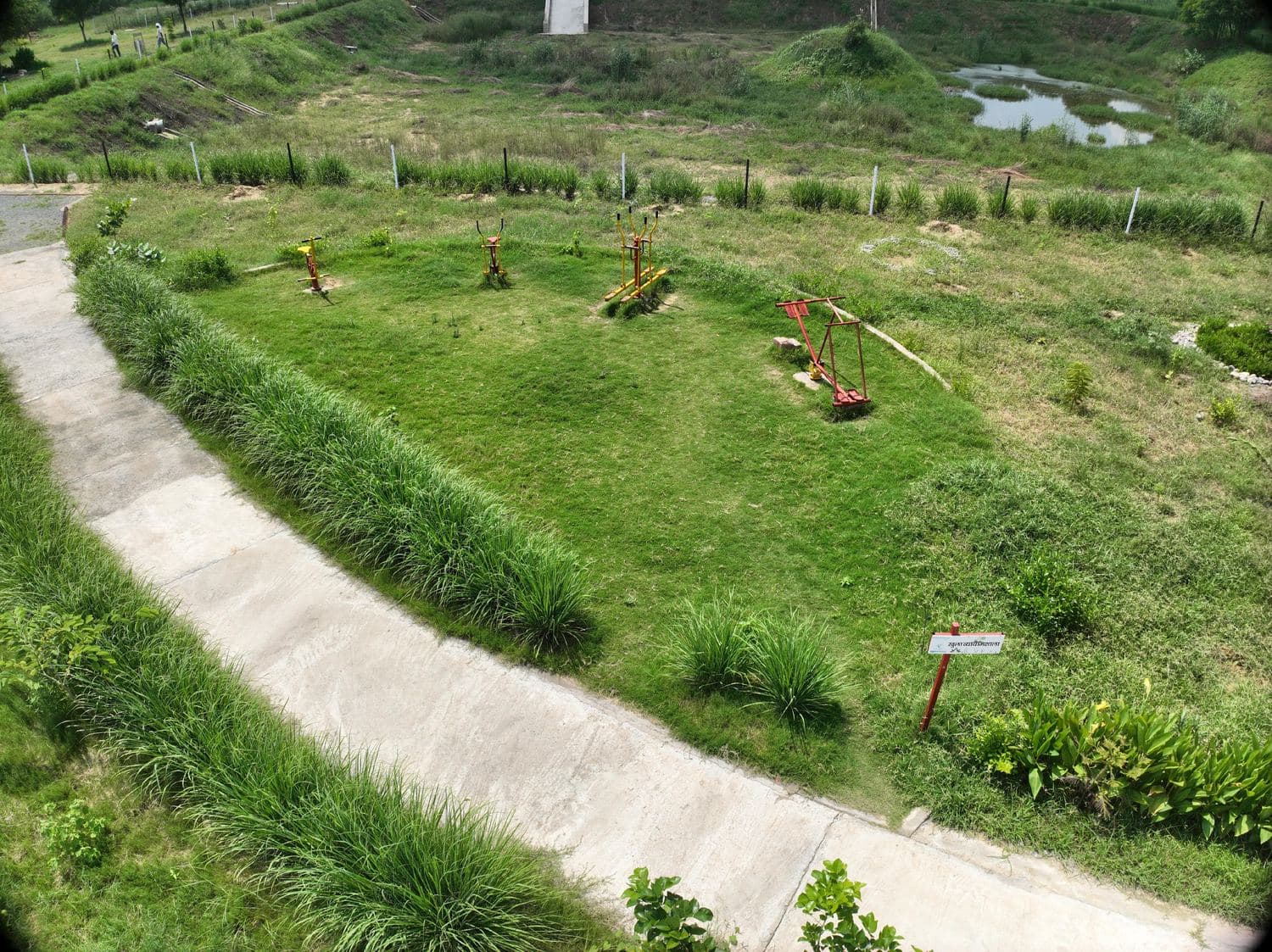
The restored site, in photographs
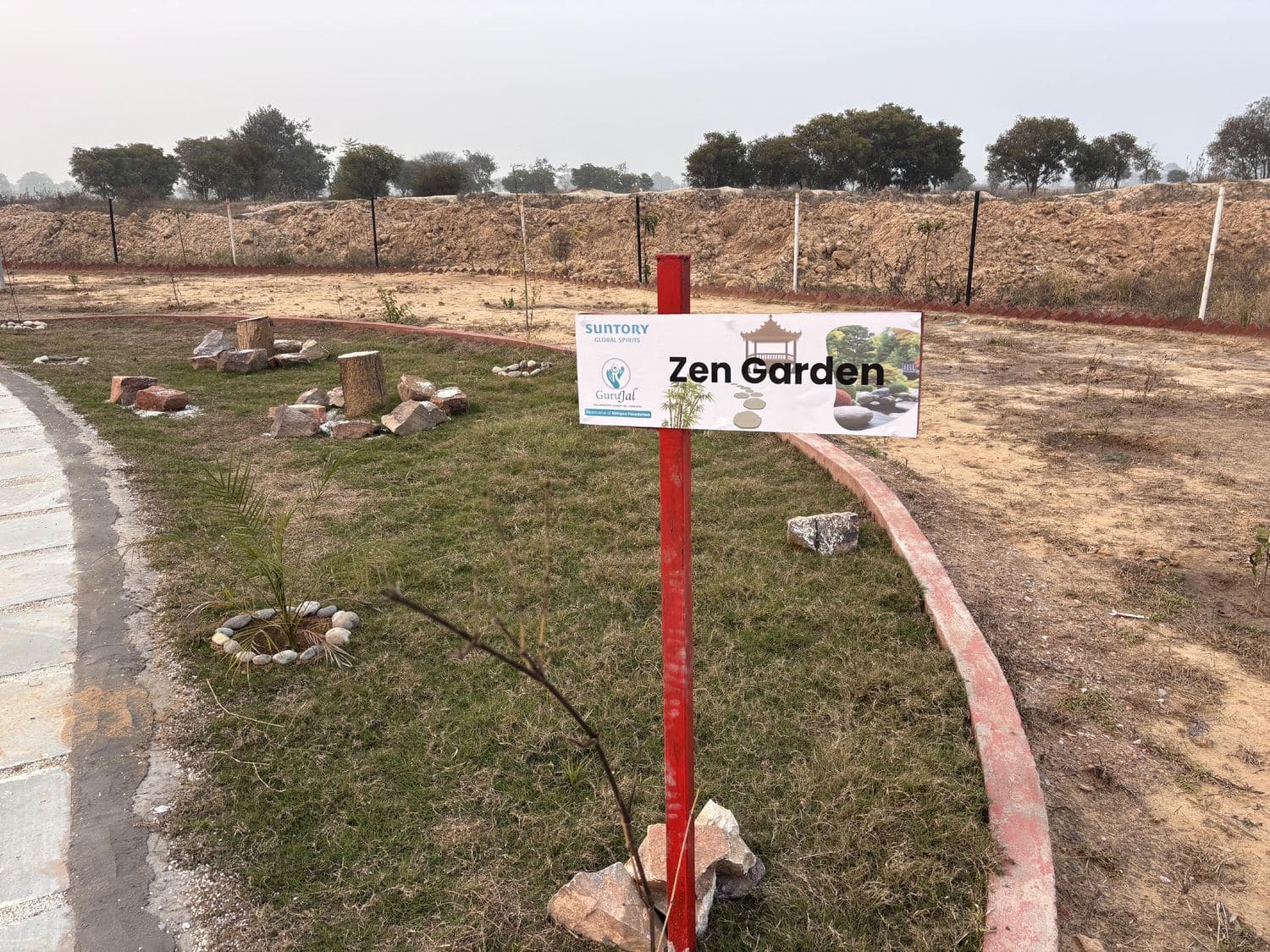
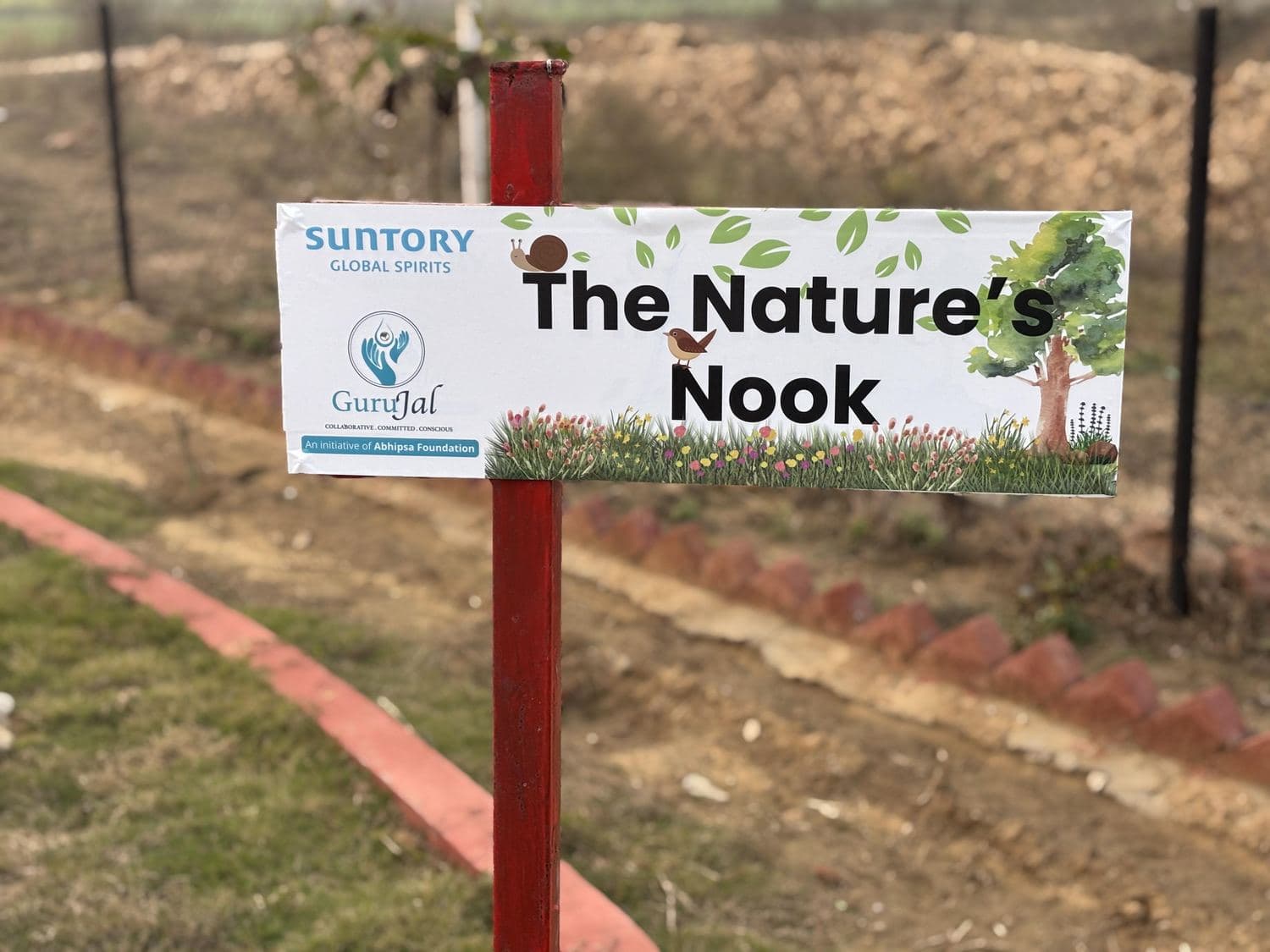
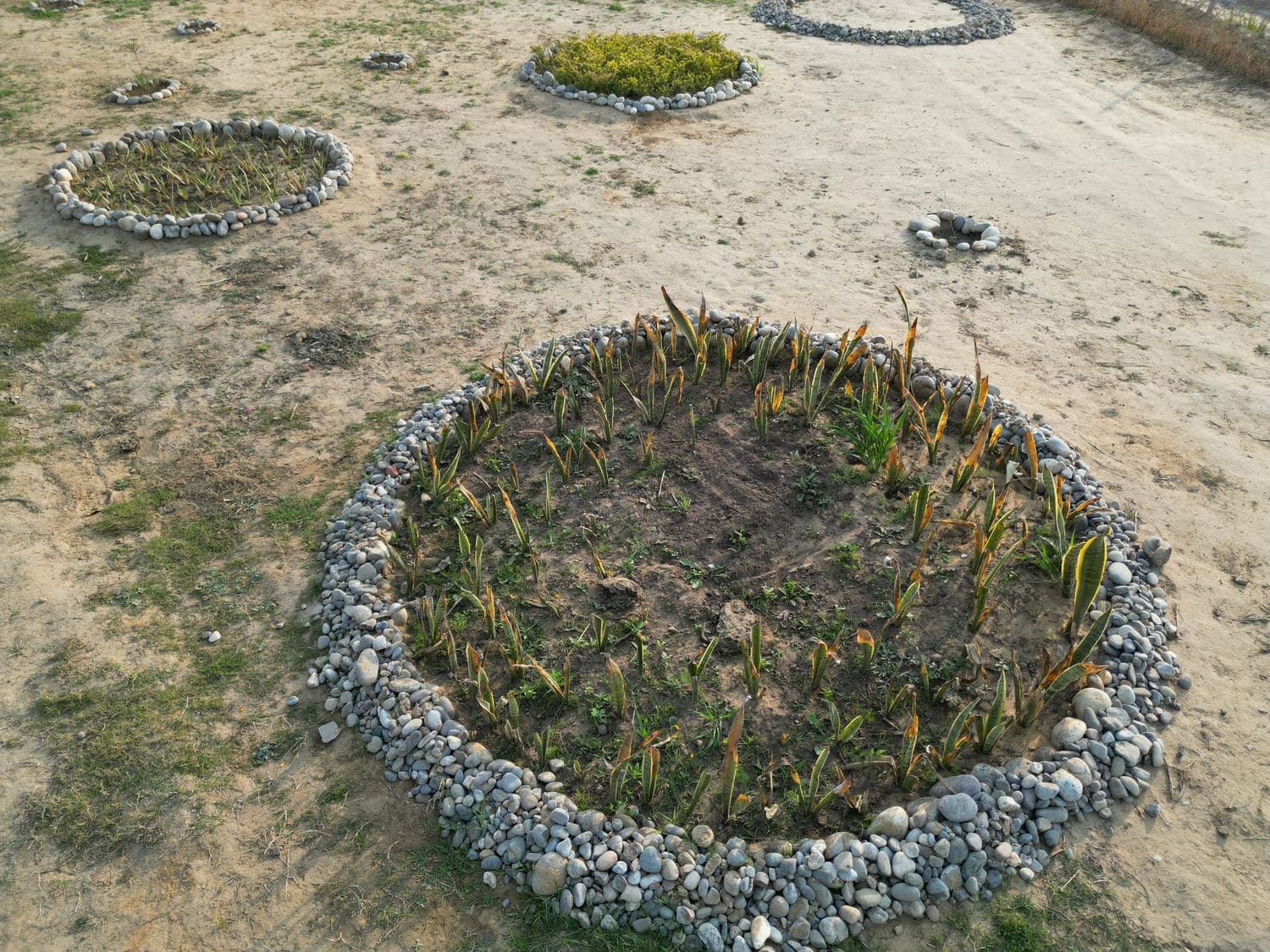
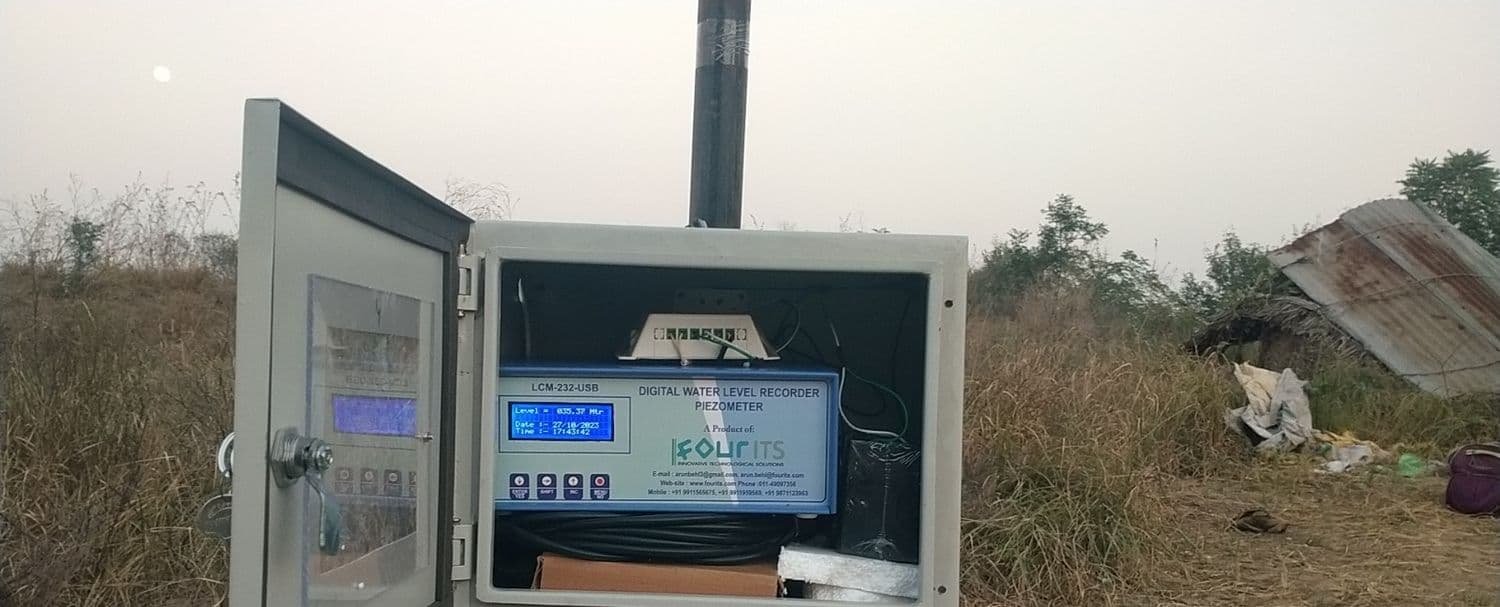
Field documentation from Bhokarka — site visits, plantation and volunteer drives, the green zones and named corners, the biodiversity returning to the water, and the monitoring equipment now tracking groundwater.
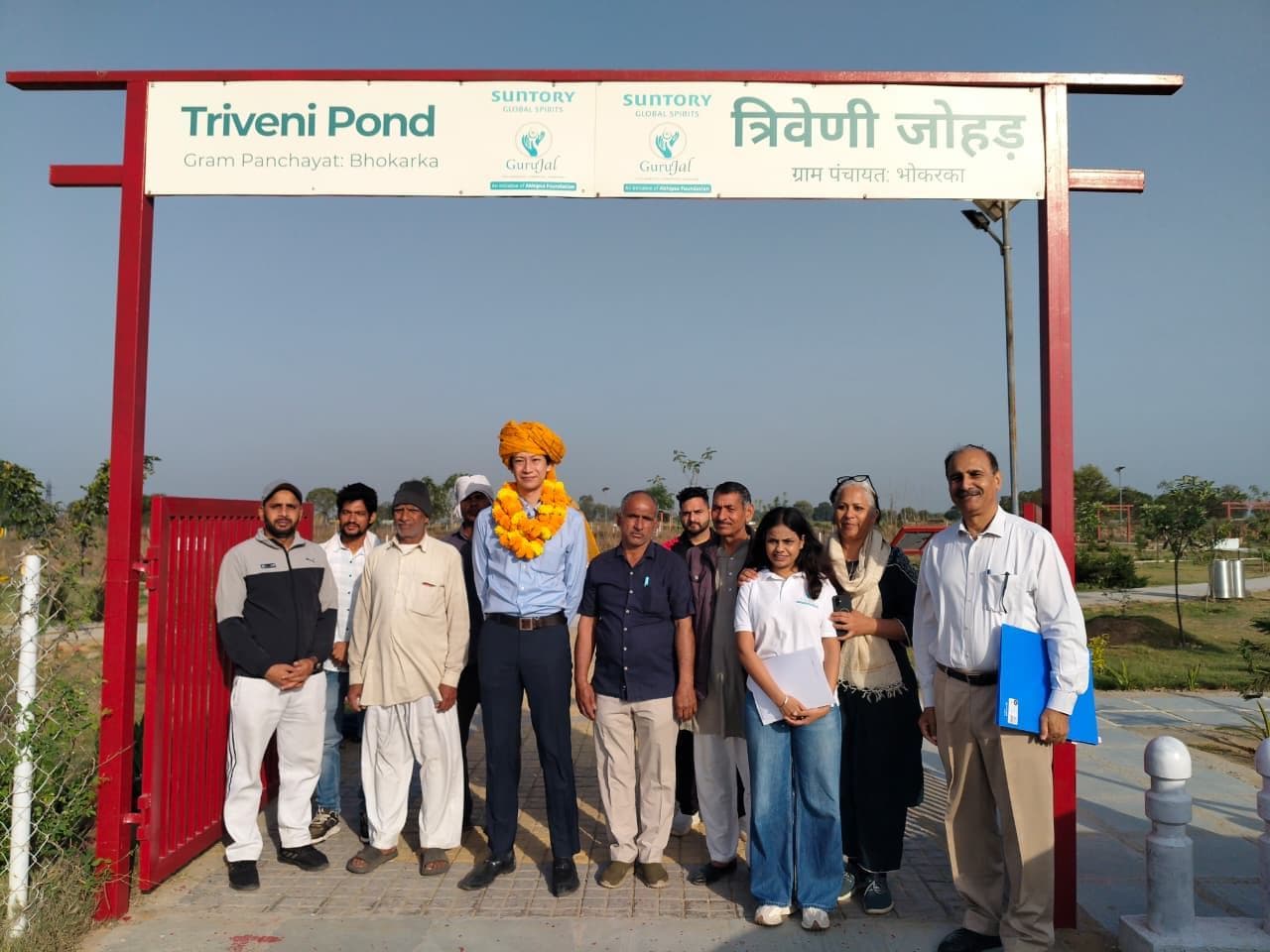
- Site Visit
- Landscaping
- Landscaping
- EVP
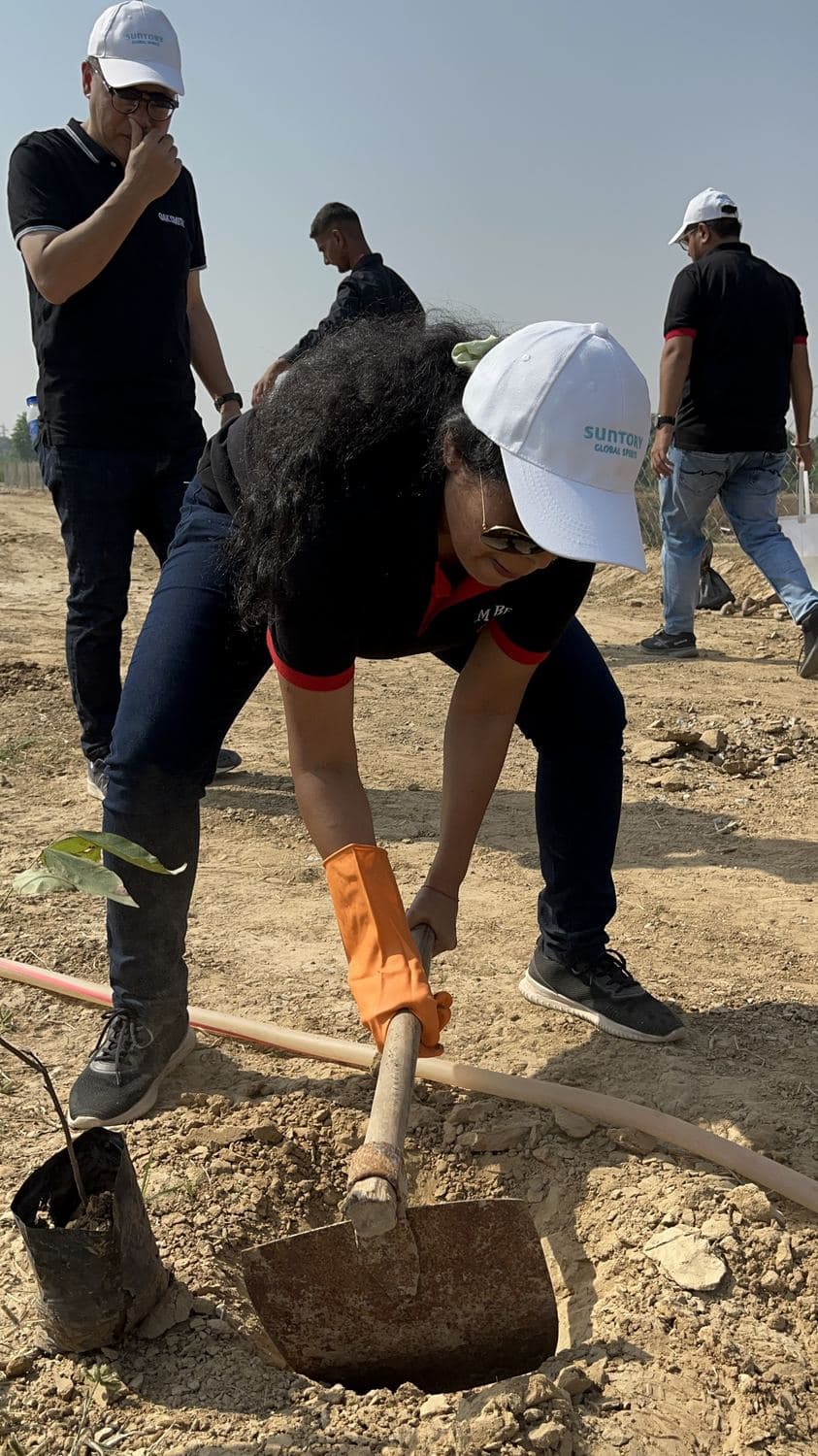
- IEC & EVP
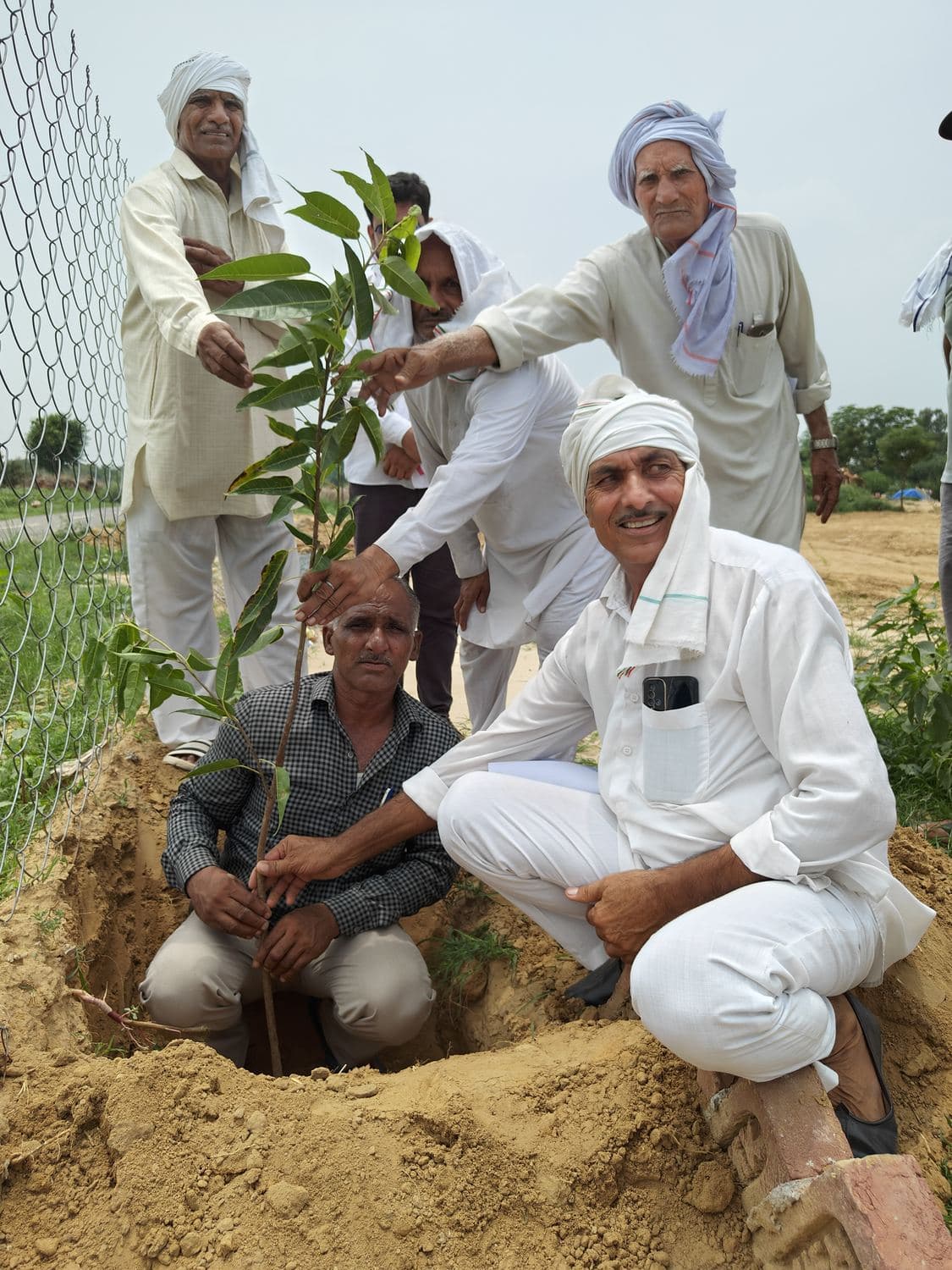
- IEC
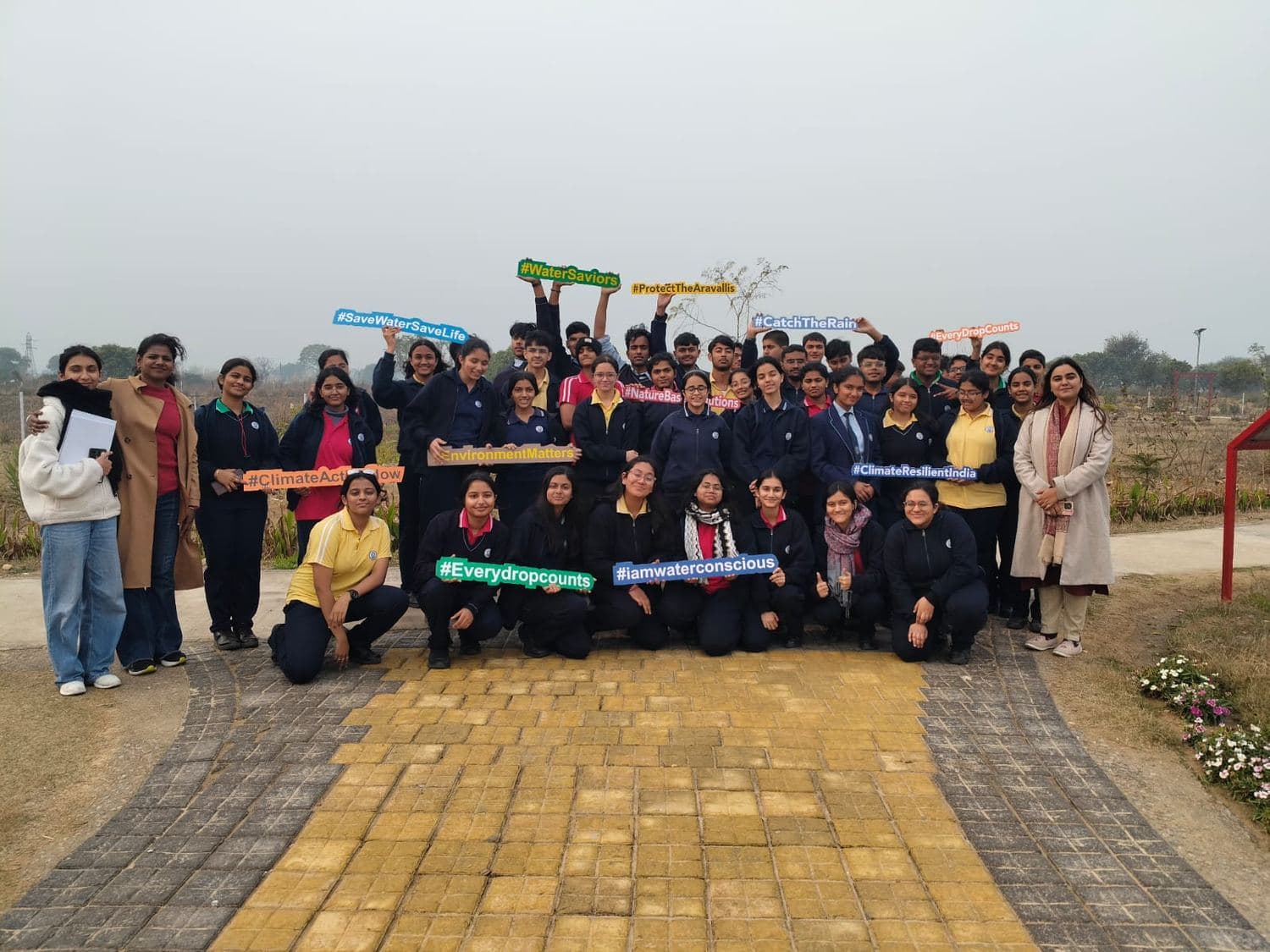
- Biodiversity
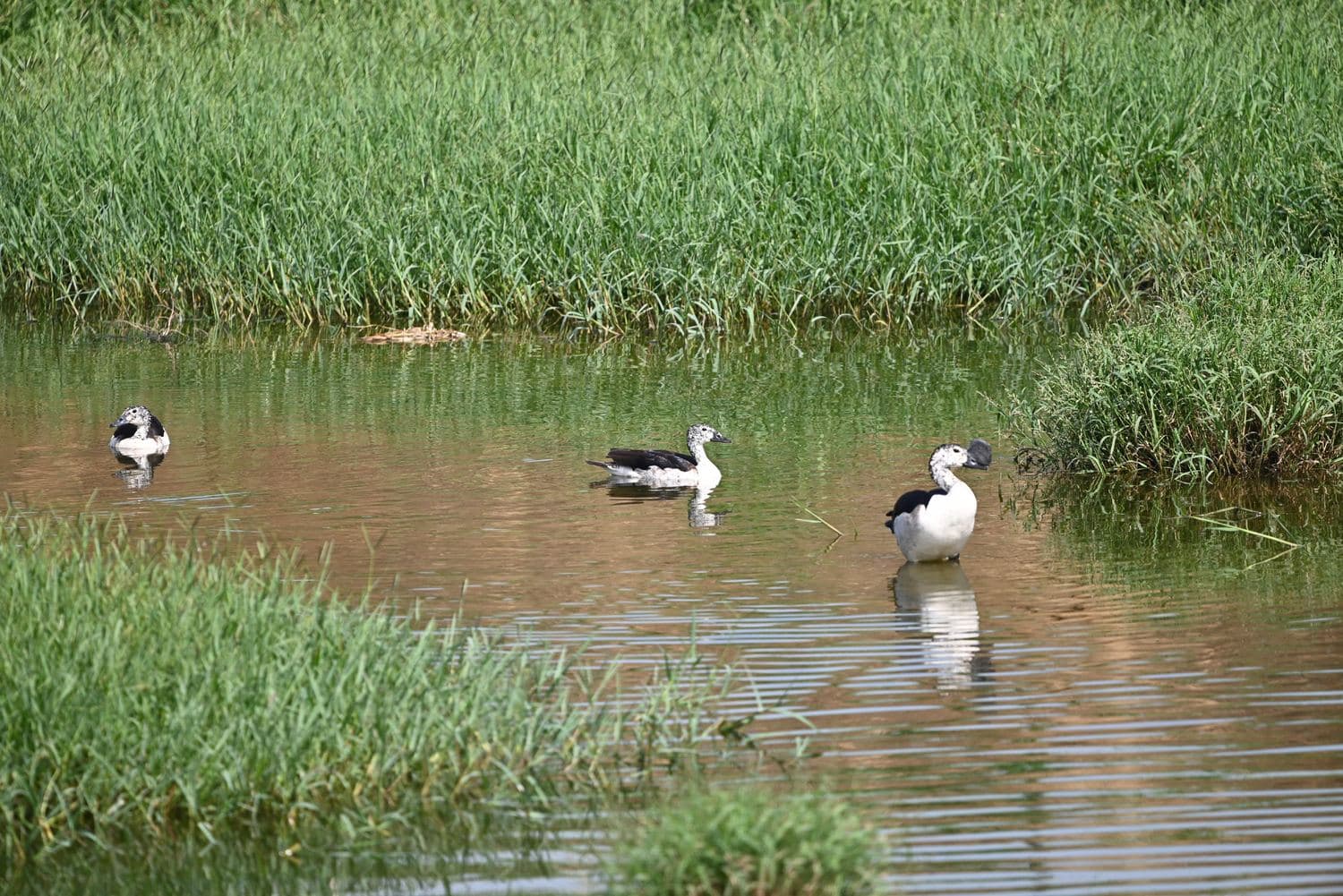
- Biodiversity
- Green Zone
- Green Zone
- Landscaping
- AWLR
Impact assessment
Groundwater, water quality and biodiversity — measured
A year of operation gives Triveni Pond something most restoration stories don't have yet — measured, year-on-year results, not just projections.
- Groundwater recharge1.39m rise
A 4.56 ft (1.39 m) rise in groundwater level over two years, plus 25.6 million litres recharged since January 2025 (WRI Volumetric Water Benefit Accounting).
- Water quality88% BOD cut
BOD reduced from 43 mg/L to 5.2 mg/L — moving the pond from a polluted to a mildly polluted category.
- Enhanced biodiversity40species
27 bird species, 9 reptiles and 4 butterfly species recorded across the site in 2025.
- Climate regulation2–3°C cooler
A localised reduction in ambient temperature of 2.0°C to 3.0°C around the restored site.
- Community ownership25–29Kvisitors/yr
25,000–29,000 people visit annually from three neighbouring villages — Bhokarka, Turkapur and Bas Paddamka.
Since the WWTP began operating in January 2025, GuruJal has treated 73 million litres of wastewater and recharged 25.6 million litres of groundwater at Triveni Pond — calculated using the WRI Volumetric Water Benefit Accounting (VWBA) framework.
Lab results
Water quality, 2023 vs 2025
| Parameter | 2023 | 2025 | Change & interpretation |
|---|---|---|---|
| pH | 7.43 | 8.54 | Slightly more alkaline, still within acceptable range |
| Total Suspended Solids (TSS) | 103.8 mg/L | 6.0 mg/L | Major improvement — turbidity and sediment sharply reduced |
| Total Dissolved Solids (TDS) | 598 mg/L | 680 mg/L | Slight increase; still moderate for pond water |
| COD | 162 mg/L | 20 mg/L | Very large improvement — organic pollution drastically reduced |
| BOD | 43 mg/L | 5.2 mg/L | Excellent improvement — polluted to mildly polluted |
| Total Nitrogen / Ammoniacal N | 21.6 mg/L | BLQ | Strong reduction — nutrient pollution significantly reduced |
| Total Phosphorus | 2.96 mg/L | 2.2 mg/L | Slight improvement |
| Hardness (as CaCO₃) | 205.8 mg/L | 165 mg/L | Slight improvement |
| E. coli | 60 MPN/100ml | <5 cfu/100ml | Major biological improvement |
| Faecal Coliform | 90 MPN/100ml | <5 | Major biological improvement |
Sample dates: 23 September 2023 (before) and 17 December 2025 (after).
Funded by

Support a Pond · Recharge the aquifers · Offset the carbon · Bring biodiversity back · Enhance green jobs · Make India water-secure.
Help us restore the next pond
Every pond restored is a community made water secure
Support GuruJal's mission to make India water neutral — one village, one pond at a time.