
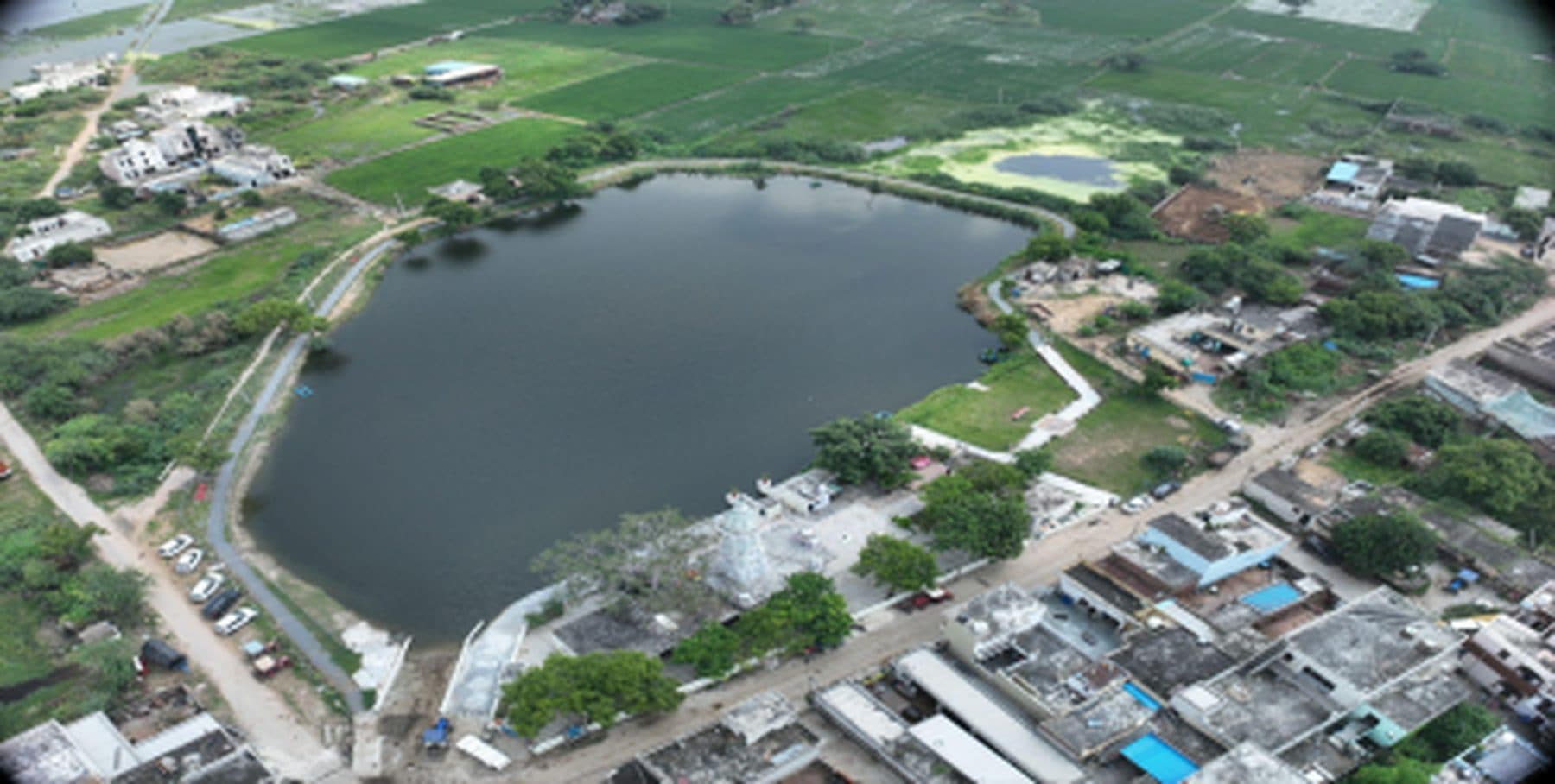
Mankrola Pond — A Freshwater Pond, Naturally Treated
A 2.5-acre village pond near Shiv Mandir in Mankrola, rejuvenated with an in-situ Floating Treatment Wetland — no heavy machinery, no energy-intensive plant, just aquatic plants, fish and phytoremediation doing the work.
- 2.5acresPond area rejuvenated
- 35.41MLPeak holding capacity
- 270+Trees planted around the pond
- 3,600Residents & floating population served
- ₹36.79LCER investment, Max Healthcare
- Jul 2025Project completed
Background
A CER-funded rejuvenation, delivered by a grassroots partner
As a responsible healthcare provider, Max Healthcare Institute Limited places strong emphasis on the sustainable and judicious use of natural resources. Under its CER commitment — and with Abhipsa Foundation as implementing partner — Max Healthcare has undertaken mass tree plantation drives and the rejuvenation of water bodies through nature-based treatment systems.
Under this programme, the Mankrola village pond near Shiv Mandir was successfully rejuvenated. All necessary approvals were obtained from the concerned departments prior to execution, and the completed pond has been acknowledged by the Gram Panchayat and the BDPO.
Abhipsa Foundation, founded in 2015, works towards a sustainable environment through grassroots activities, policy advocacy, mass awareness, community action and field demonstrations — with GuruJal as its integrated water-management initiative.
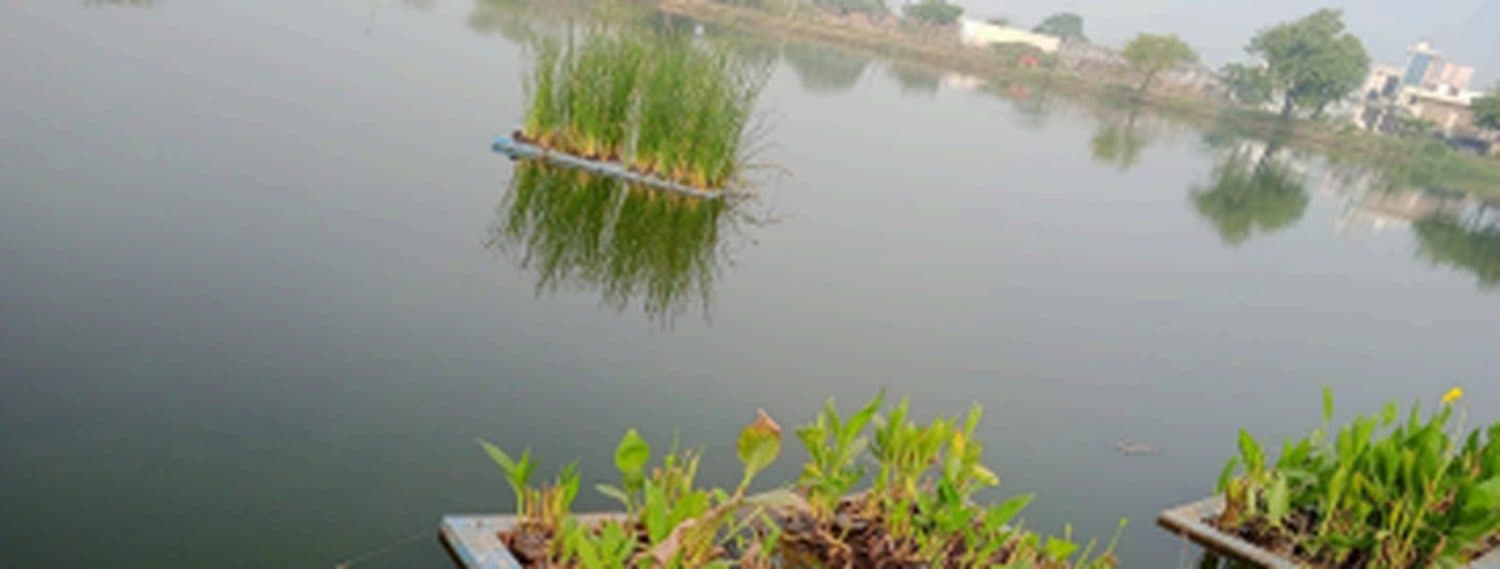
In-situ treatment
Floating treatment wetlands seeded with phytoremediation plants
The site
A 2.5-acre freshwater pond near Shiv Mandir
The project rejuvenated the Mankrola freshwater village pond near Shiv Mandir in Mankrola, Gurugram District, Haryana — a natural water body of 2.5 acres. Abhipsa Foundation was the execution agency, with a design period running from April 2025 to July 2025.
The restored pond holds a peak capacity of roughly 35,410 m³ — about 35.41 ML — and benefits an estimated 2,600 village residents plus a further 1,000 floating population that passes through the area.
Site at a glance
- Village
- Mankrola
- Pond type
- Natural freshwater pond
- Area
- 2.5 acres
- District
- Gurugram
- State
- Haryana
- Coordinates
- 28.509025°N, 76.902227°E
The need
Conventional treatment is priced out of the village
- The installation and operating costs of existing wastewater treatment technologies are high — and hence ill-afforded by communities.
- The available technologies are often complex, requiring heavy machinery that is capital-intensive to build and energy-intensive to run.
- A large gap between sewage generation and installed treatment capacity means large volumes of wastewater keep discharging into natural water courses, polluting water reservoirs.
The approach
Rejuvenate the water body through a natural treatment system
To mitigate the impact of wastewater on groundwater, GuruJal proposed to rejuvenate the Mankrola village pond near Shiv Mandir using an in-situ natural treatment system — an approach aligned with the government initiative to revive water bodies through nature-based treatment rather than energy-intensive plants.
Technical interventions
An in-situ treatment system, built into the pond itself
The scheme combines a Floating Treatment Wetland using phytoremediation-based aquatic plants, fish, screening of the stormwater drainage, and a solid-waste O&M routine — improving water quality where the water sits, without a built plant.
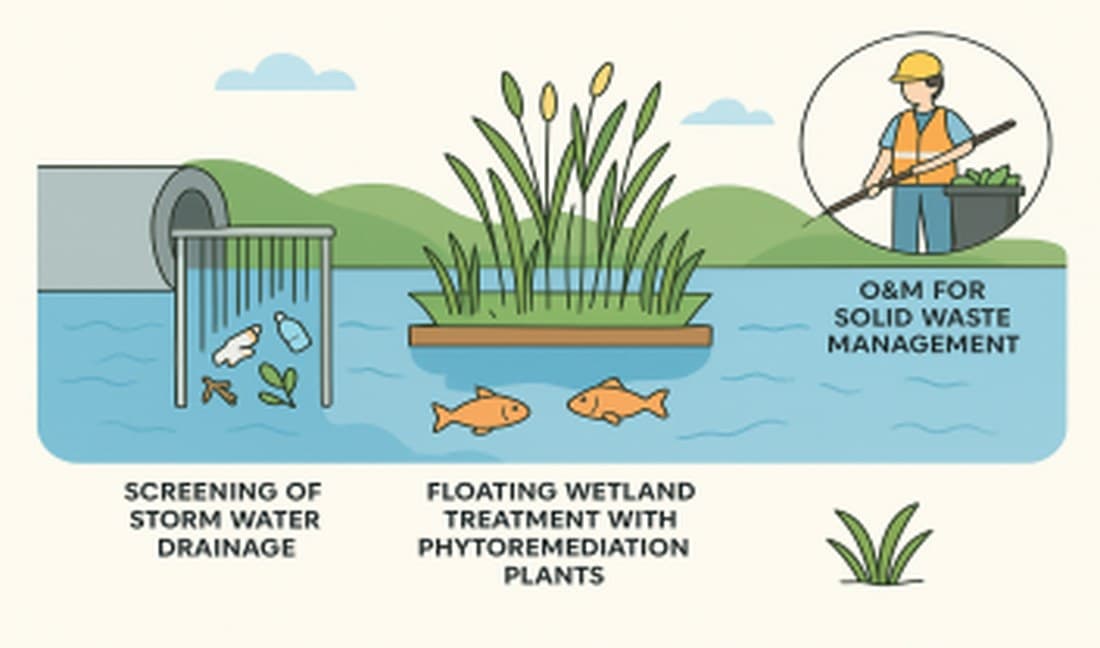
Table 1 treatment scheme — screening, floating wetland treatment, and solid-waste O&M.
- 01
Floating Treatment Wetland (FTW)
Planted rafts float on the pond surface, their roots hanging directly into the water column to filter and absorb pollutants in situ — no tank, no pumping.
- 02
Phytoremediation plants
Aquatic macrophytes on the rafts take up nitrogen, phosphorus and organic load, steadily improving the pond's water quality as they grow.
- 03
Fish
Fish stocked into the pond graze algae and organic matter, supporting the wetland's treatment action and the pond's ecological balance.
- 04
Stormwater screening
Screening at the stormwater drainage inlet keeps solid waste and debris out of the pond before it can settle or pollute.
- 05
Solid-waste O&M
An ongoing operation-and-maintenance routine for solid-waste management around the pond keeps the catchment clean and the treatment effective.
Water quality is tracked against a full set of design influent parameters — pH, dissolved oxygen, BOD, COD, TDS, alkalinity, nitrogen, ammoniacal nitrogen, phosphate, organic phosphorus, salinity and TSS.
Ecology & landscape
270+ trees, and a monitored micro-climate
More than 270 treeswere planted around the pond. As they establish, they will improve the micro-climate of the area — cooling the surroundings, cutting dust, and anchoring the soil along the pond's edge.
Groundwater levels near the pond are monitored so the recharge benefit of the rejuvenated water body can be tracked over time, alongside biodiversity conservation across the restored landscape.
Key benefits
- Treatment of pond water
- Water quality management
- Landscape development
- Carbon sequestration
- Stormwater management
- Community development
- Solid waste management
- Groundwater recharge
- Groundwater level monitoring
- Biodiversity conservation
Before and after
From dumping-ground edges to a landscaped waterfront
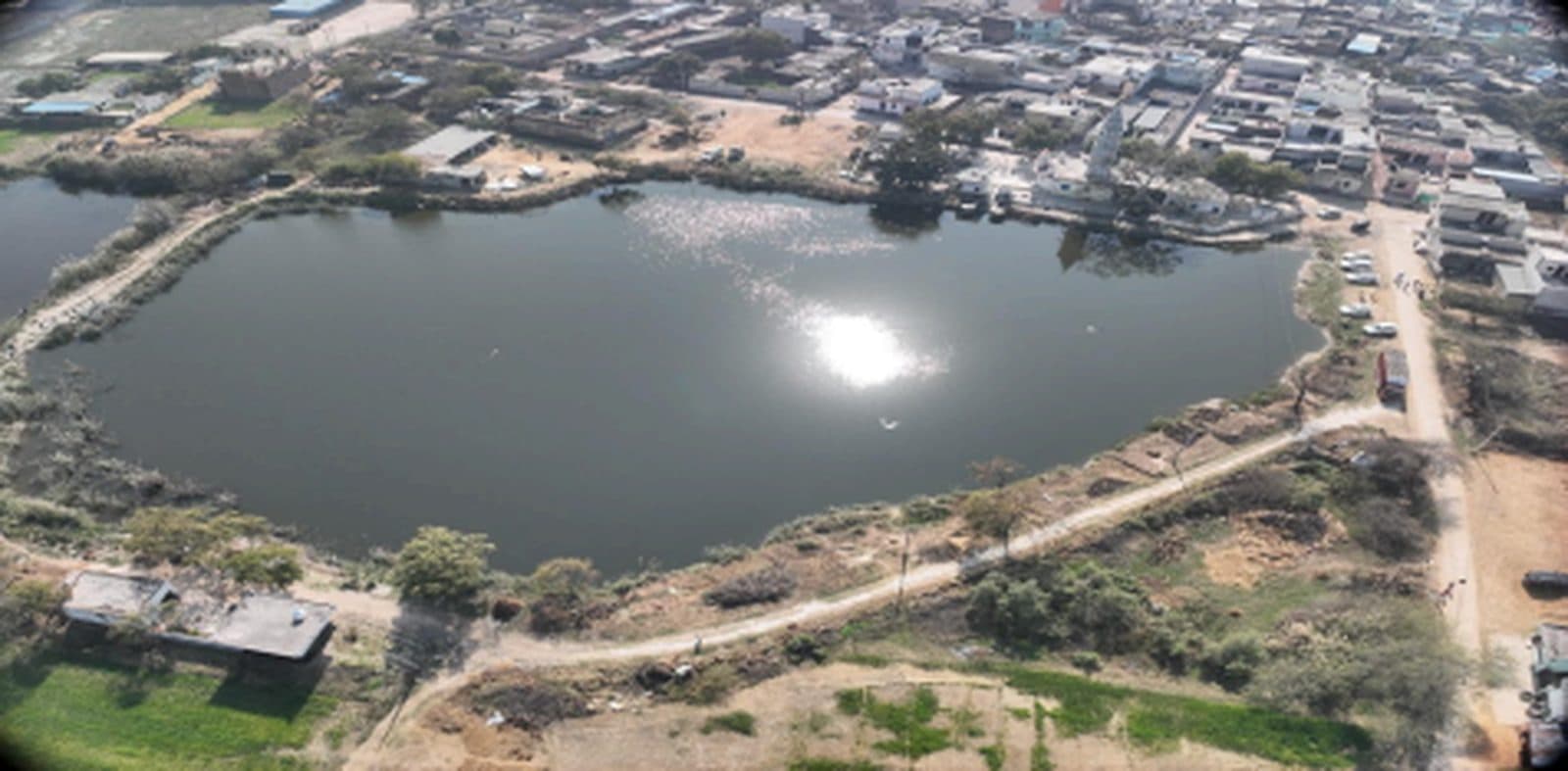 BeforeAfter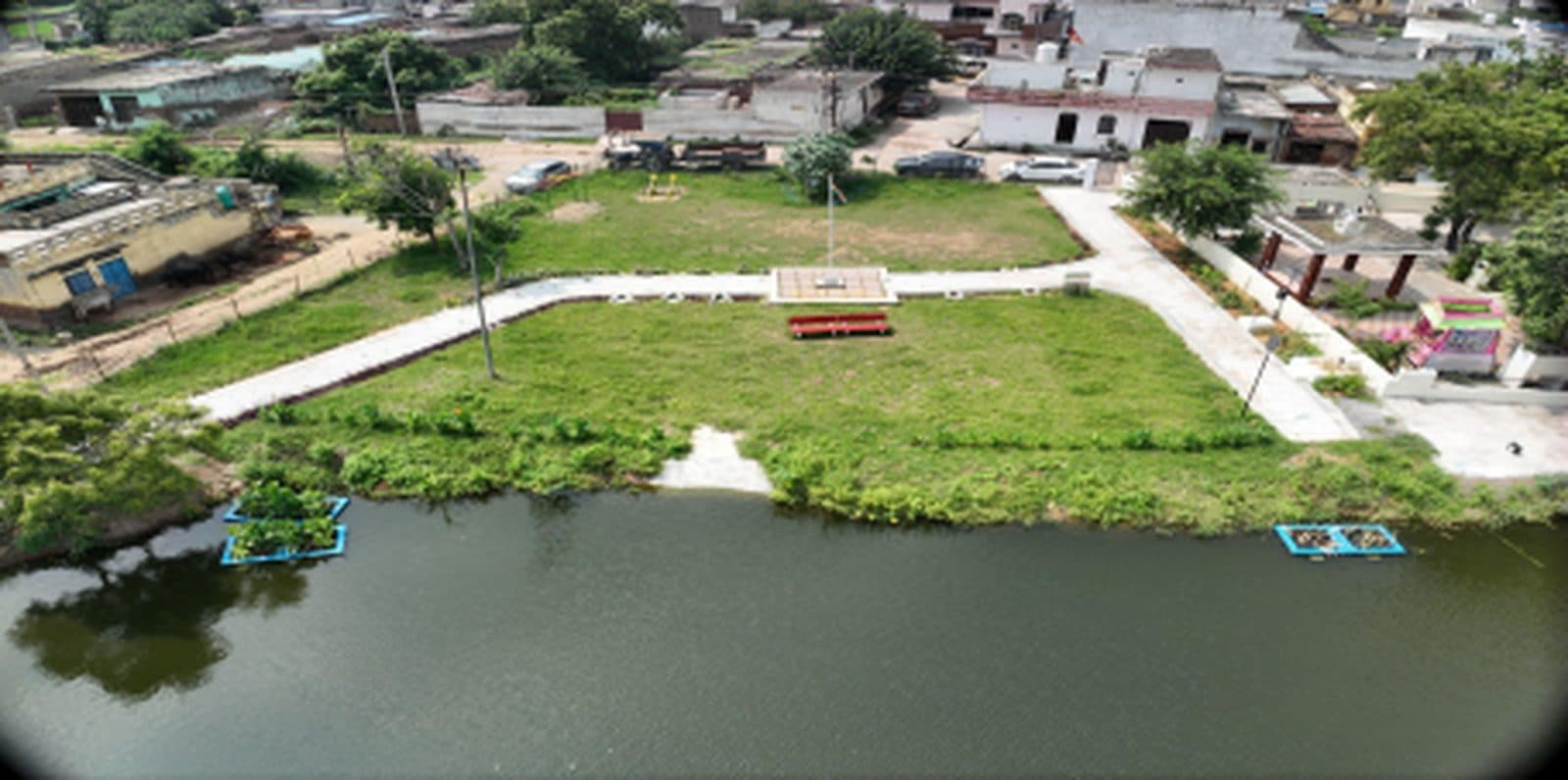
Impact
What the rejuvenation delivers for Mankrola
- Wastewater treated naturally
The pond's own wetland treats village wastewater in situ, improving water quality so it can be used for fisheries and irrigation.
- Water conserved & recharged
Treated water percolates naturally into the ground, conserving water and recharging the aquifer beneath Mankrola.
- Better area water quality
Natural percolation of the treated water improves groundwater quality across the surrounding area over time.
- Public health
The rejuvenated pond mitigates waterlogging in the village and cuts down mosquito breeding around the settlement.
Funded & delivered by
Funded under Max Healthcare's Corporate Environmental Responsibility programme and implemented by Abhipsa Foundation, with a total project cost of ₹36,78,833.65.
Help us restore the next pond
Every pond restored is a community made water secure
Support GuruJal's mission to make India water neutral — one village, one pond at a time.