Reclaiming a Roadside — The Green Belt at Rajiv Chowk
A 0.49-acre triangular traffic island near Shivaji Nagar, once a dumping ground on a busy Gurugram highway, rebuilt into a landscaped green belt with 1,619 trees, a walking path and a community mural — one traffic island at a time.
- 0.49acresTraffic island reclaimed
- 1,619Trees planted
- 245Shrubs planted
- 88speciesPre-existing flora recorded
- 2yrsO&M handover period
- 27 Mar 2024Inaugurated
Background
A city growing faster than its green cover
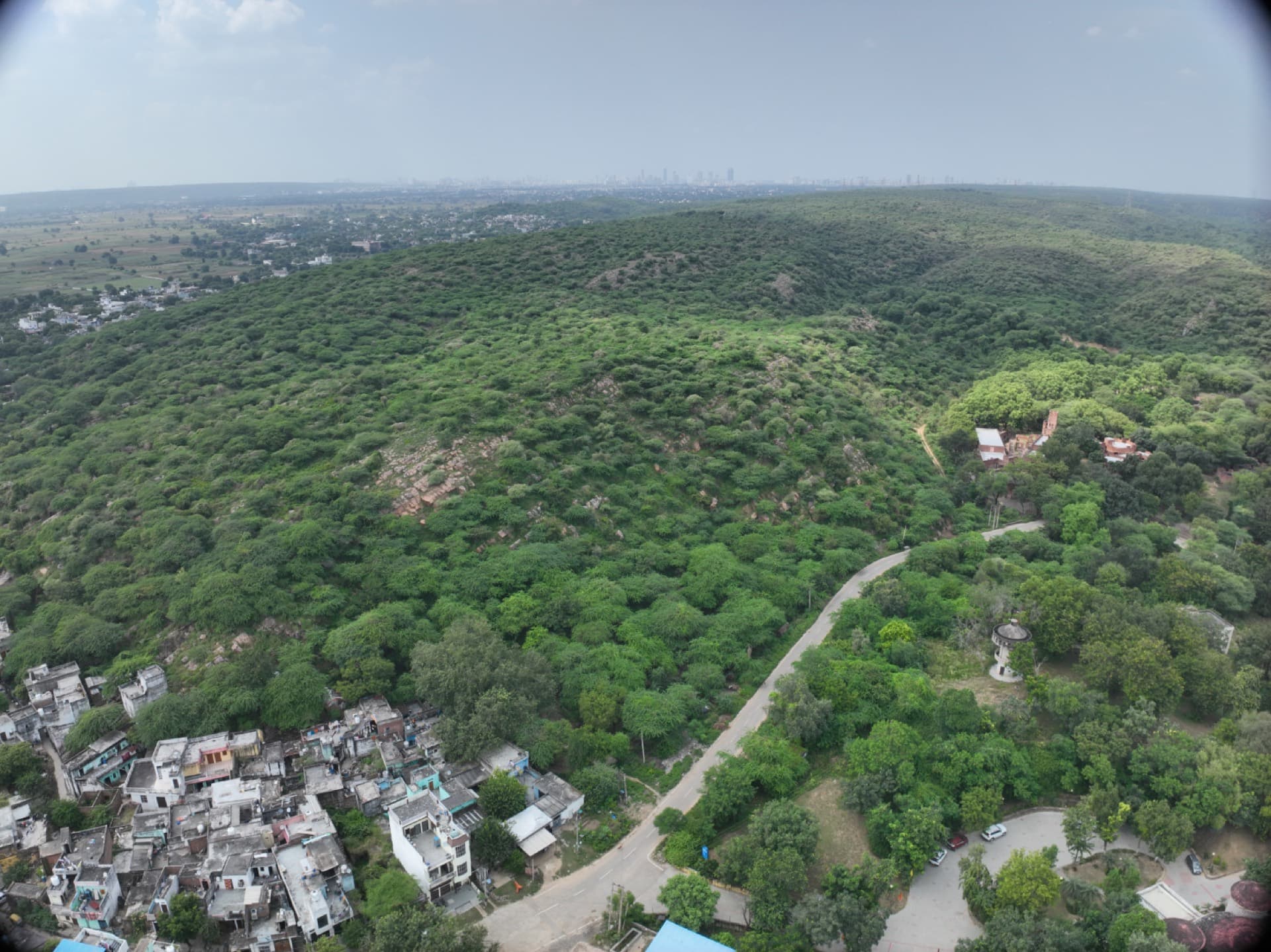
Gurugram is one of India's fastest-growing urban agglomerations — a city of glass towers, highways and multinational headquarters expanding at a pace that leaves little room for its natural landscape. Forest and green cover in Haryana already sits at just 3.6%of the state's geographical area, far below the prescribed norm of 33%. As Gurugram's paved area grows, its green cover shrinks in step, driving up pollution, water-logging and heat stress across the city.
It was against this backdrop that GuruJal, an integrated water management initiative of the Abhipsa Foundation, partnered with Pearl Global Industries Limited under its CSR programme to take on a triangular, 0.49-acre traffic island at Rajiv Chowk, near Shivaji Nagar in Sector 32 — and turn it from a neglected roadside patch into a functioning green belt for the city.
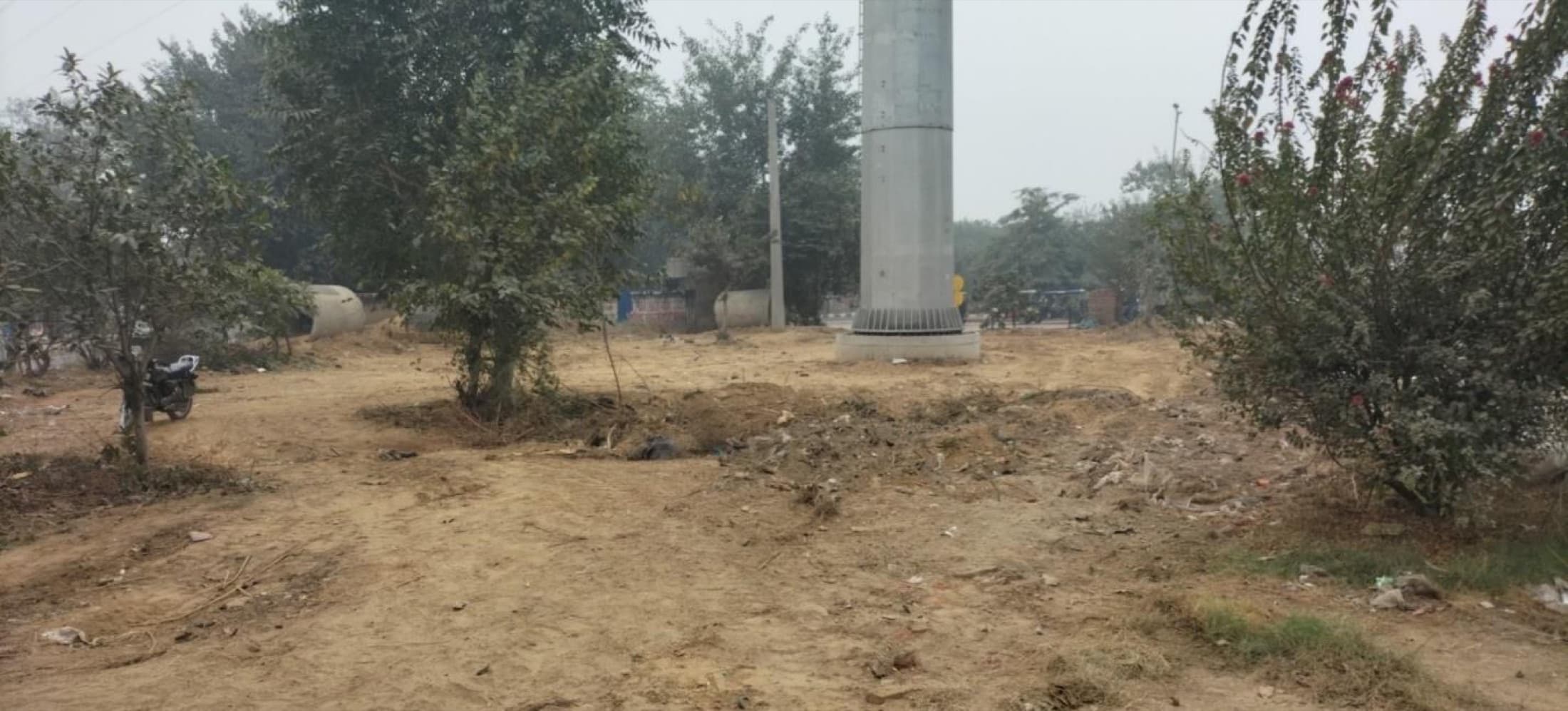
Ground documentation, January 2024
Solid waste and invasive weeds around the water tank base
The site
A green belt on paper, a dumping ground in practice
The site sits at a busy intersection along the National Highway near Rajiv Chowk, within the jurisdiction of the Gurugram Metropolitan Development Authority (GMDA). It had originally been designated a green belt, intended for biodiversity conservation and a cleaner streetscape.
In practice, it had become the opposite. The area was used as a dumping ground for solid waste, the transient community living in makeshift shelters nearby contributed to open defecation, and the terrain itself was undulating and choked with invasive weeds growing alongside the few native trees that remained. An ecological profiling exercise conducted before work began recorded 37 trees, 21 shrub varieties and 30 species of herbs, grasses and climbers on site, alongside a handful of butterfly and bird species — a fragile ecosystem hanging on despite the neglect around it.
Site at a glance
- Location
- Rajiv Chowk, Sector 32
- Site type
- Triangular traffic island
- Area
- 0.49 acres
- Jurisdiction
- GMDA
- CSR partner
- Pearl Global Industries Ltd.
- Coordinates
- 28.445725°N, 77.036228°E
The need
Not a cosmetic fix — a genuine environmental intervention
Green belts along traffic corridors do more than beautify a city. For Gurugram — grappling with rising pollution, heat-island formation and shrinking open space — a well-designed green belt at a high-traffic junction like Rajiv Chowk mattered on several fronts at once.
- Mitigate traffic-induced air and noise pollution along the corridor.
- Moderate local temperature and humidity around a paved, high-heat junction.
- Absorb particulates and vehicular gases from a busy National Highway stretch.
- Act as green lungs and rest points within dense urban infrastructure.
- Reclaim a public space that had fallen into misuse, for residents and commuters to take pride in.
Intervention
A full landscape build-out, six parts in sequence
Work on the ground began with the basics — cleaning, grubbing and levelling a site that had been treated as a dumping ground for years — then moved through a complete landscape build-out.
- 01
Site preparation
Clearing invasive growth, levelling the undulating terrain, and preparing the base for footpaths — after first cleaning, grubbing and backfilling soil around the culverts running through the plot.
- 02
Circulation and structure
A stabilised footpath network, fencing around the perimeter, and a formal entrance gate replacing the informal, encroached access point.
- 03
Softscape
Mulching and soil preparation for plantation, followed by planting of trees, shrubs and hedges, and installation of green netting.
- 04
Amenities
Seating, dustbins, guiding signage and street lighting for the surrounding community and commuters.
- 05
Civil and utility works
Brickwork for garden beds, plastering of the adjoining boundary wall, HDD (horizontal directional drilling) work for a new water connection, and a water storage tank.
- 06
Placemaking
A brick sculpture base at the centre of the site, crowned with a sculpture jointly branded by GMDA and Pearl Global, plus an on-site branding board acknowledging all project partners.
Getting this built required as much coordination as construction. As the site fell under GMDA's jurisdiction, GuruJal secured a formal MoU with GMDA (signed 10 November 2023) after site verification with the local Patwari, followed by No Objection Certificates from GMDA's Environment and Sustainability wing. Ongoing coordination with the National Highways Authority of India, the Municipal Corporation of Gurugram, and Dakshin Haryana Bijli Vitran Nigam kept utility and infrastructure work — water and electricity connections in particular — moving alongside the landscaping.
Plantation & biodiversity richness
1,619 trees and 245 shrubs, planted by species and zone
The planting plan was built around native and hardy ornamental species suited to the site's roadside conditions, distributed across distinct zones. By the time of inauguration, the green belt carried over 200 trees and 500 flowering plants, alongside the hedge lines, grass turf and ornamental beds that now frame the pathways.
1,619 trees planted
By species
- Ficus reginald — 100
- Ficus benjamina — 50
- Harsingar — 10
- Sita Ashok — 1
Remaining count made up of grass-turfing and hedge-line plantings across the site.
245 shrubs planted
By species
- Koochia — 100
- Ficus starlight — 50
- Euphorbia milli — 30
- Murraya dwarf — 30
- Hibiscus — 10
- Shami — 10
- Morpankhi — 8
- Bougainvillea — 3
Habitat retained
Combined with the pre-existing native tree cover, the site retains habitat value for species already recorded there — adding the density and variety needed to genuinely function as an urban green lung rather than just a landscaped traffic island.
- Common Grass Yellow
- Small Grass Yellow
- Plain Tiger
- Rock Pigeon
Before and after
From garbage-strewn patch to landscaped green triangle
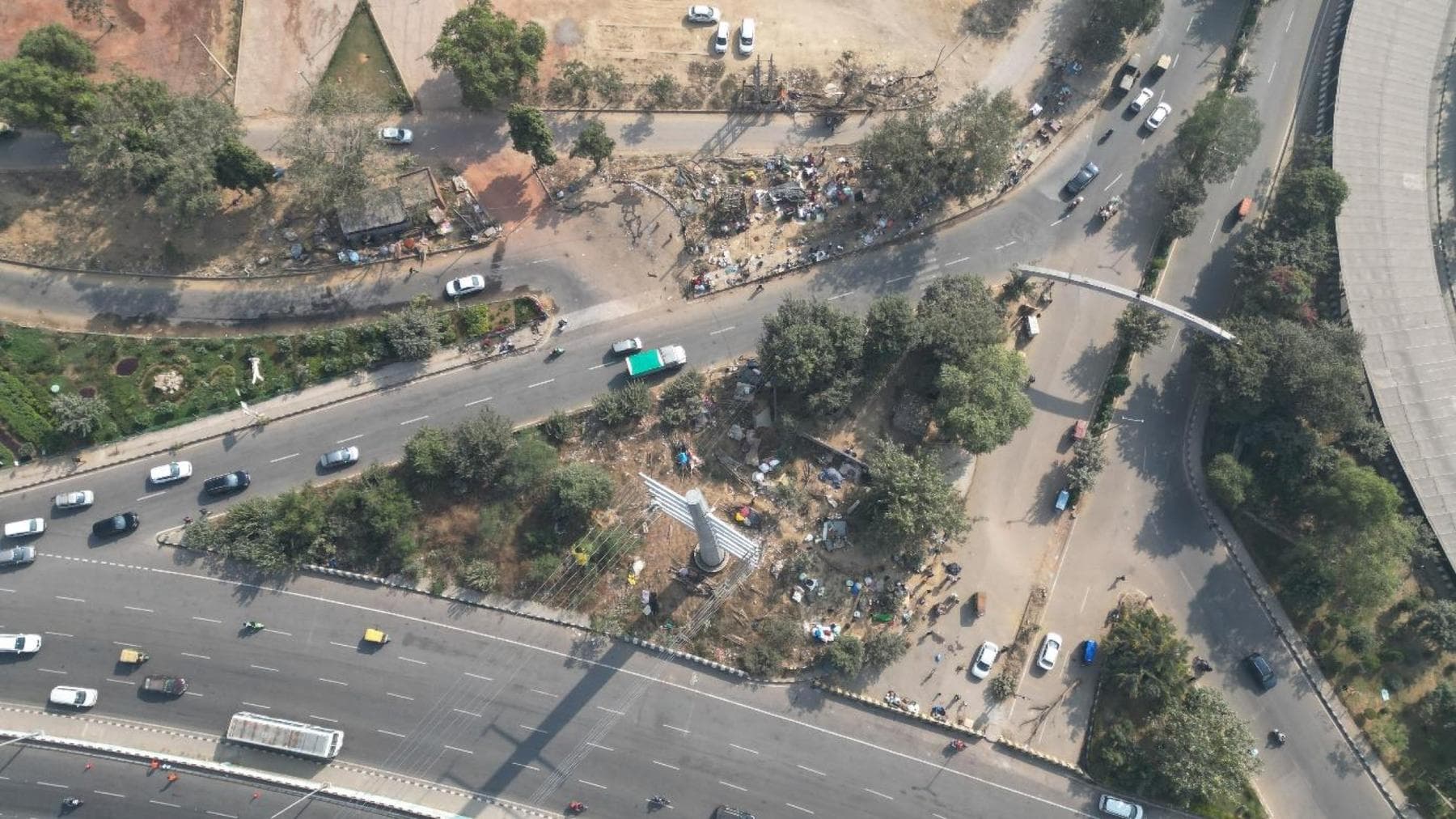 BeforeAfter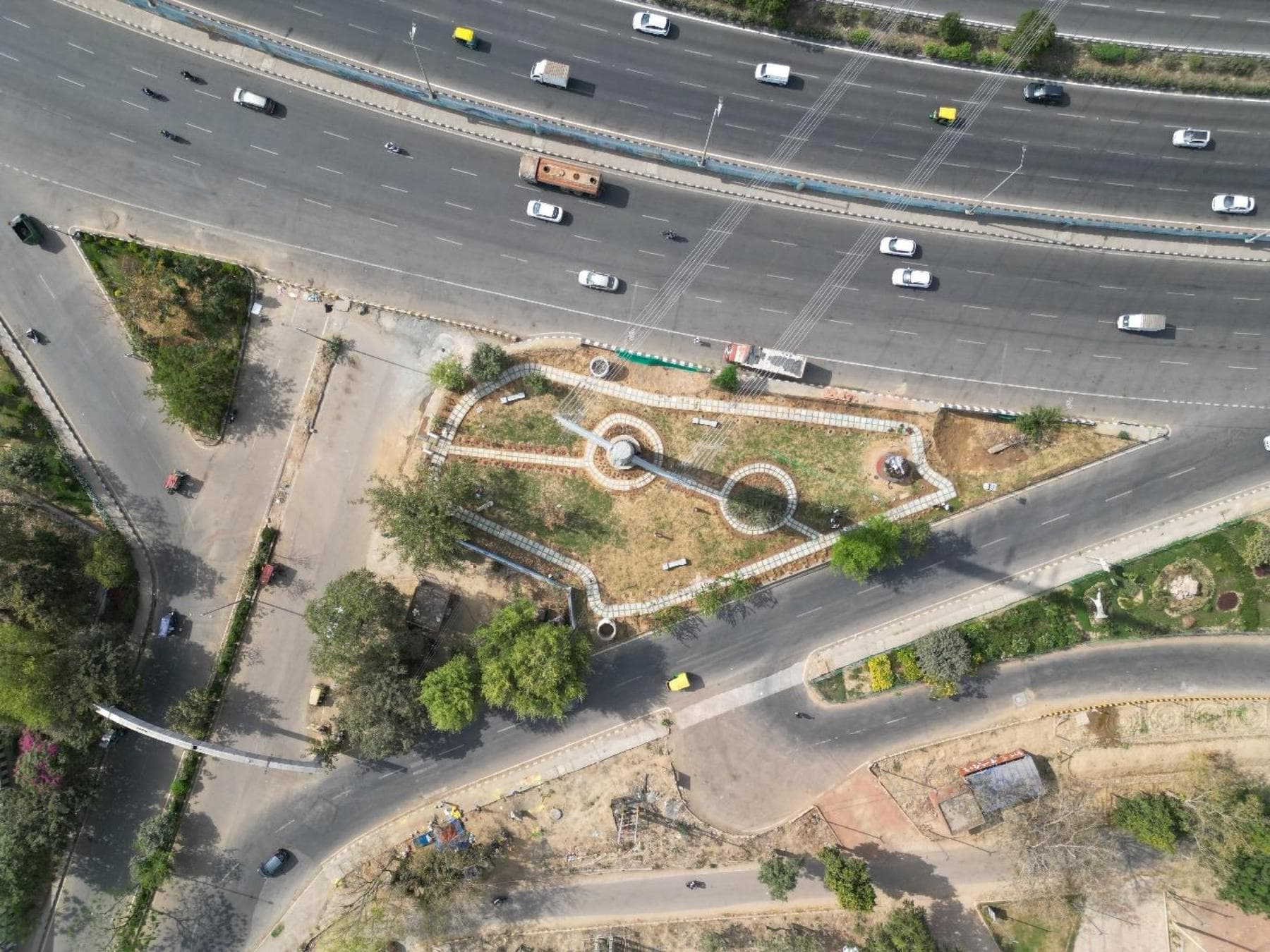
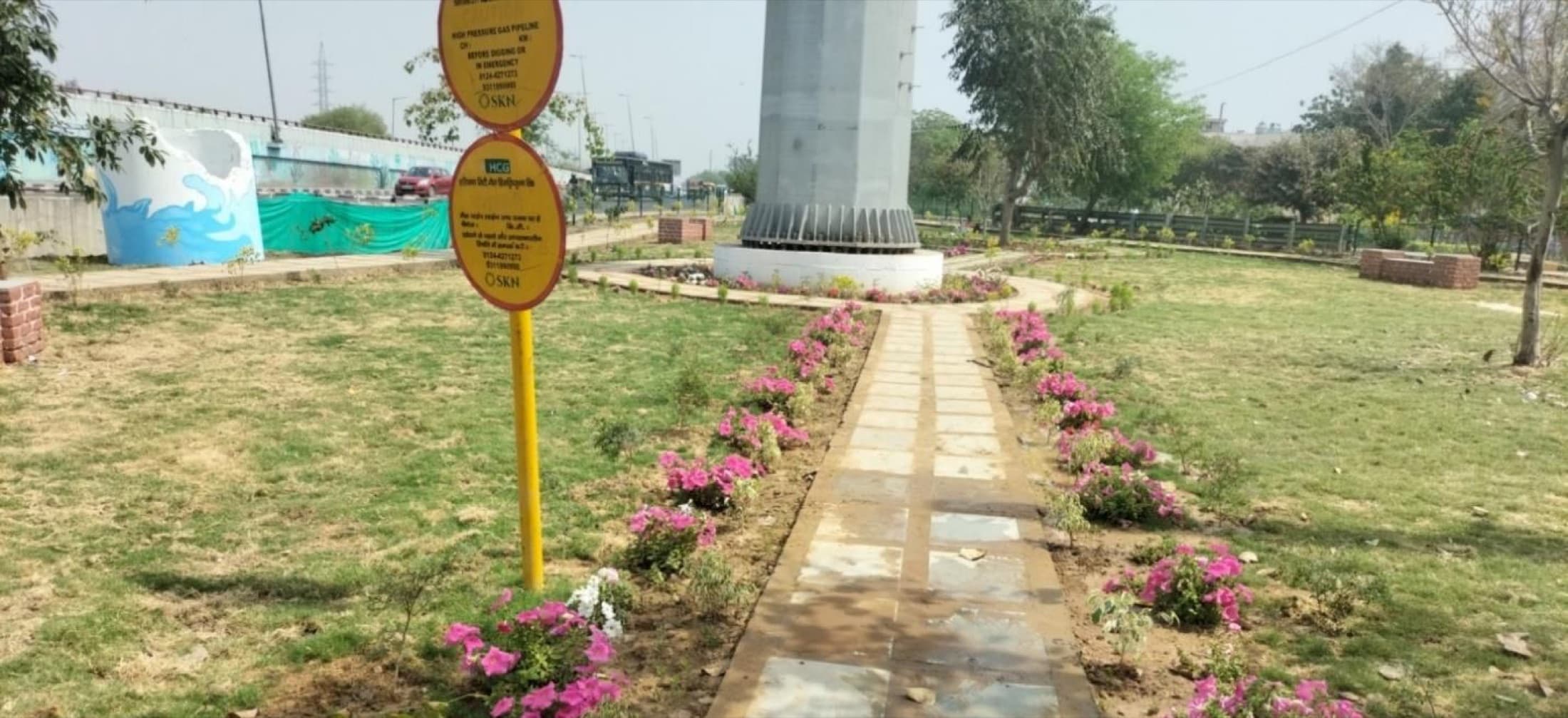
Ground view of the central pathway
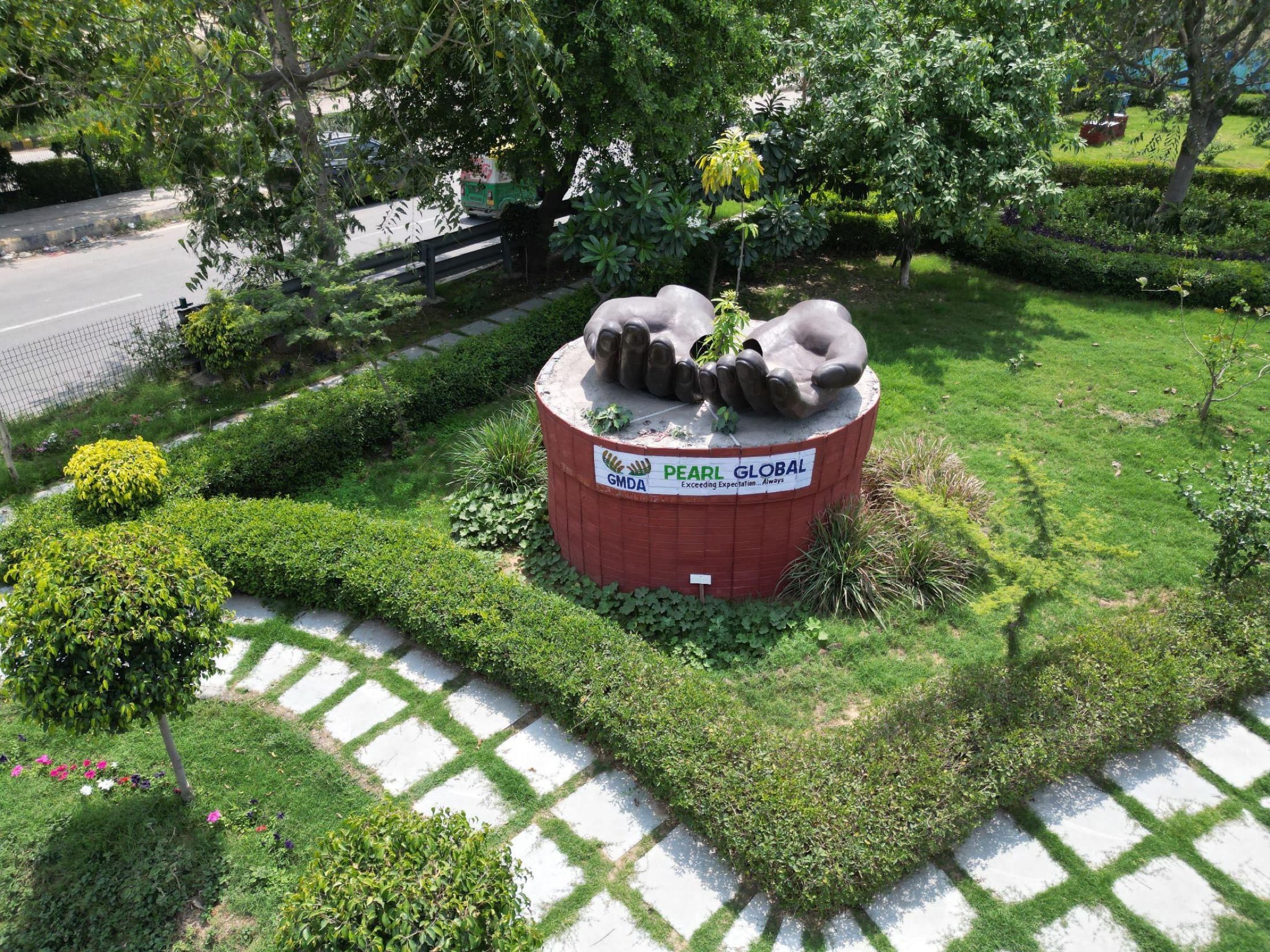
The GMDA × Pearl Global sculpture
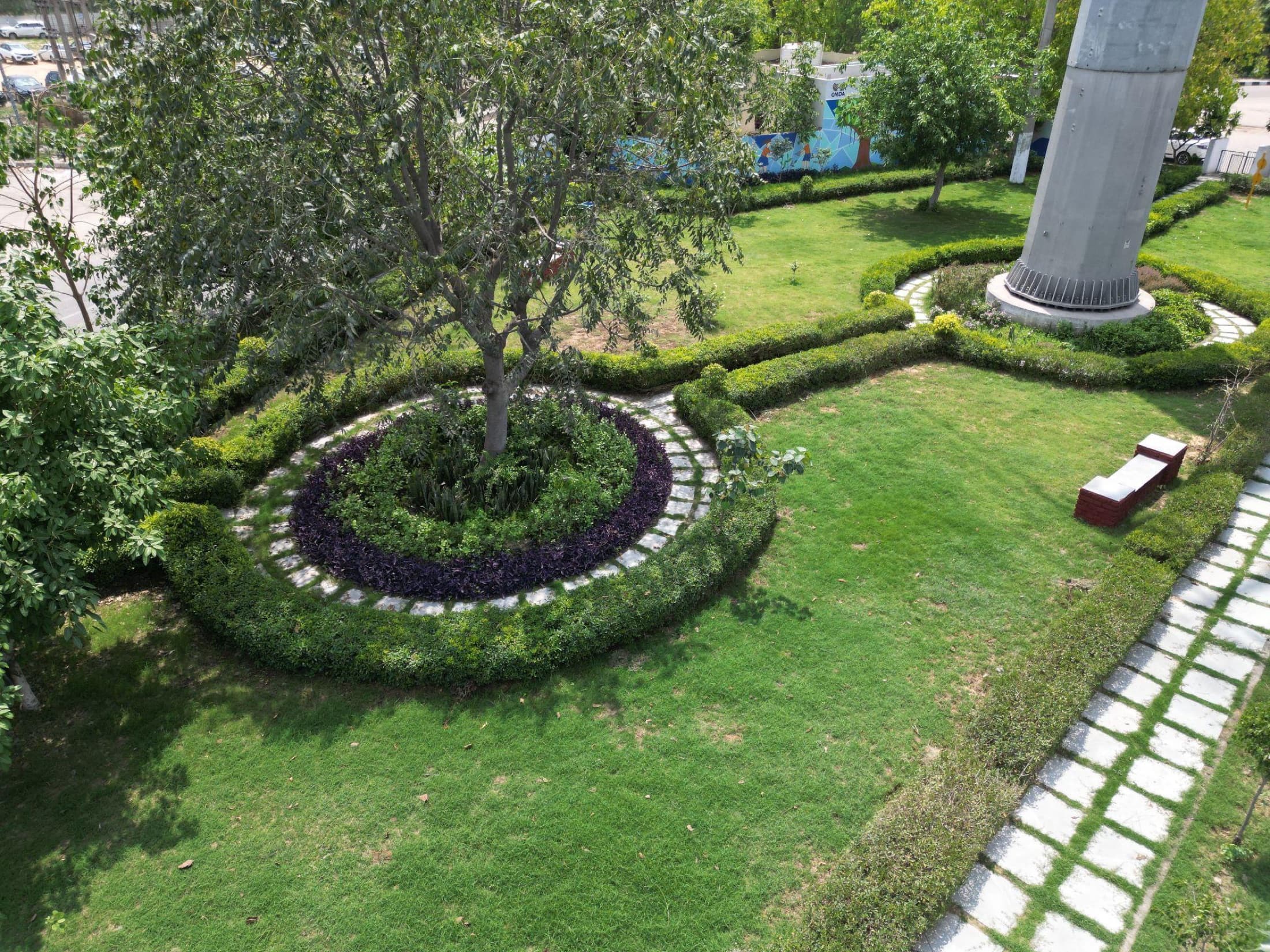
The landscaped garden, from above
Community & outreach
A boundary wall turned into a mural, and a chowk turned into a gathering point
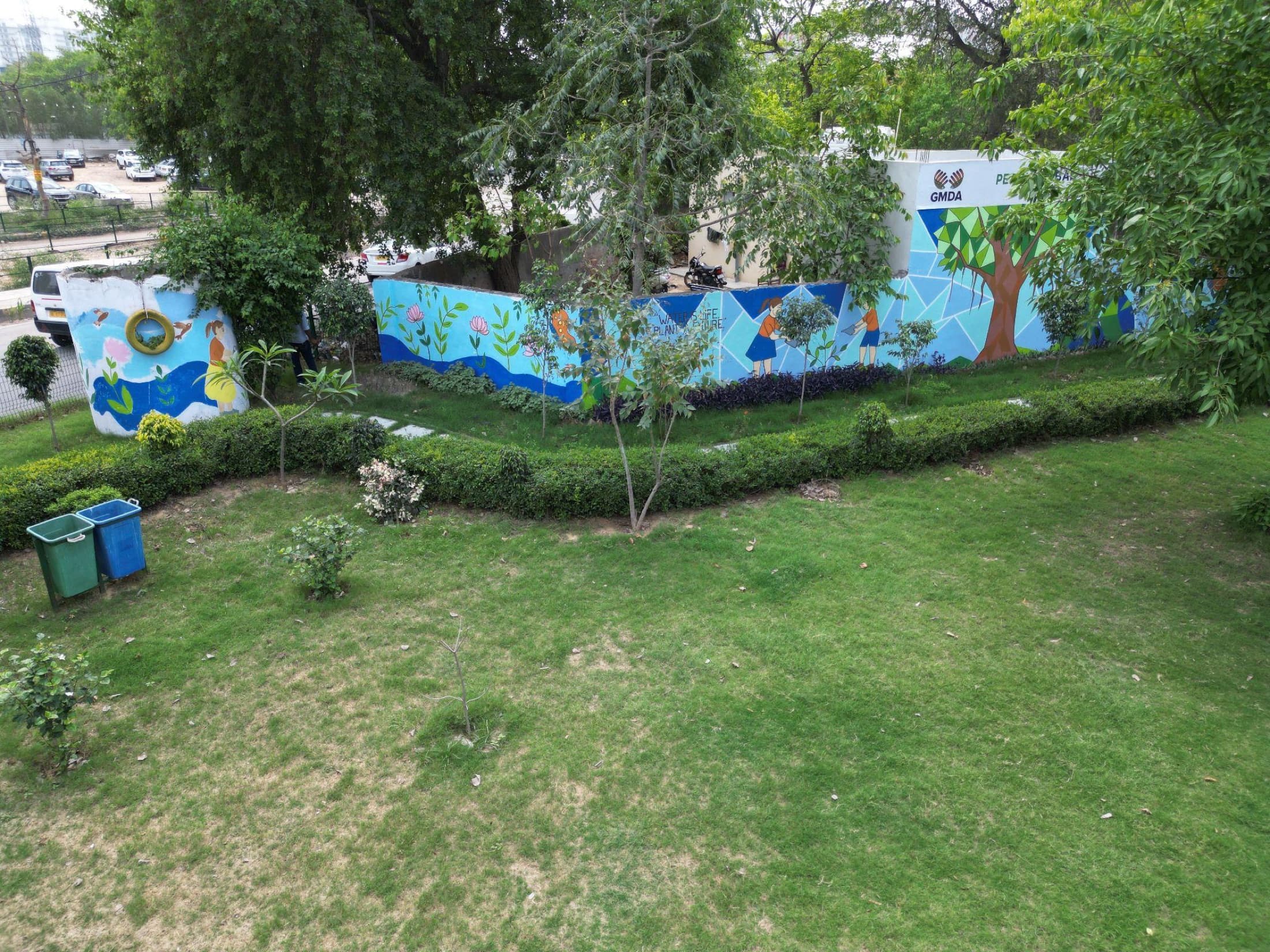
The project carried a strong community and outreach component alongside the construction. A painting drive on 22 March 2024, timed to coincide with World Water Day, brought together local volunteers and the Pearl Global and GuruJal teams to turn the boundary wall into a mural.
In-depth interviews with vendors, migrant labourers and the local Banjara community were conducted to understand how the space was actually being used, and by whom.
The completed green belt was formally inaugurated on 27 March 2024, with GMDA's Additional CEO, Pearl Global's leadership, and GuruJal's trustees and CEO in attendance.
Impact
Designed to work on several levels at once
- Pollution mitigation
The plant cover along this high-traffic stretch of highway helps absorb vehicular pollutants and dampen noise from the road.
- Water & heat management
The green cover supports rainwater catchment for groundwater recharge and helps moderate the surrounding temperature, pushing back against the urban heat-island effect.
- Biodiversity support
The plant palette leans heavily on native species, reinforcing the local ecosystem rather than replacing it.
- Public space reclaimed
A stretch of road that had been a dumping ground and site of open defecation is now a fenced, lit and maintained green space with seating and a paved walking trail.
- A replicable governance model
An MoU-driven partnership between a CSR funder (Pearl Global), an implementation partner (GuruJal/Abhipsa Foundation) and the civic authority (GMDA) — followed by a structured two-year O&M handover — offers a template for other neglected traffic islands across Gurugram.
What began as a garbage-strewn, undulating patch of land at a busy chowk is now a maintained green triangle with over 1,600 trees, a walking path, seating, lighting, and a functioning identity of its own — a small-scale but concrete answer to the question of how a rapidly urbanising city holds on to its green cover.
Restore a landscape with us
Bring eco restoration to your geography
We partner with governments, CSR teams and landowners to design and deliver restoration projects — from a single traffic island to a 3,000-hectare landscape.