Maujabad Pond — A Village Reclaims Its Water
From a waste-choked water body to a community asset — a 1.2-acre village pond restored with a phytorid wastewater treatment plant and a community that put its own money on the table.
- 1.2acresPond area restored
- 100KLDPhytorid WWTP capacity
- ₹31.33lakhsGovernment investment
- ₹6lakhsCommunity crowdfunding
- ₹37.33lakhsTotal project investment
- May 2024Project documentation
Background
From the vibrant centrepiece of a village to a waste-choked sink
Maujabad Pond was once the vibrant centrepiece of the village landscape — a place where generations gathered along its shores. Over the years, rapid urbanisation and steady neglect transformed it into a polluted water body, choked with waste, sewage and aquatic weeds.
Rainwater and wastewater from adjacent villages drained directly into the pond. Solid waste accumulated along the periphery, and monsoon agricultural runoff added another layer of nutrient pollution — accelerating eutrophication and aquatic-weed proliferation.
The restoration journey emerged from community determination to reclaim their heritage. GuruJal, together with the gram panchayat and the residents of Maujabad, embarked on a comprehensive rejuvenation programme to restore the pond's ecological health and turn it back into a thriving community water asset.
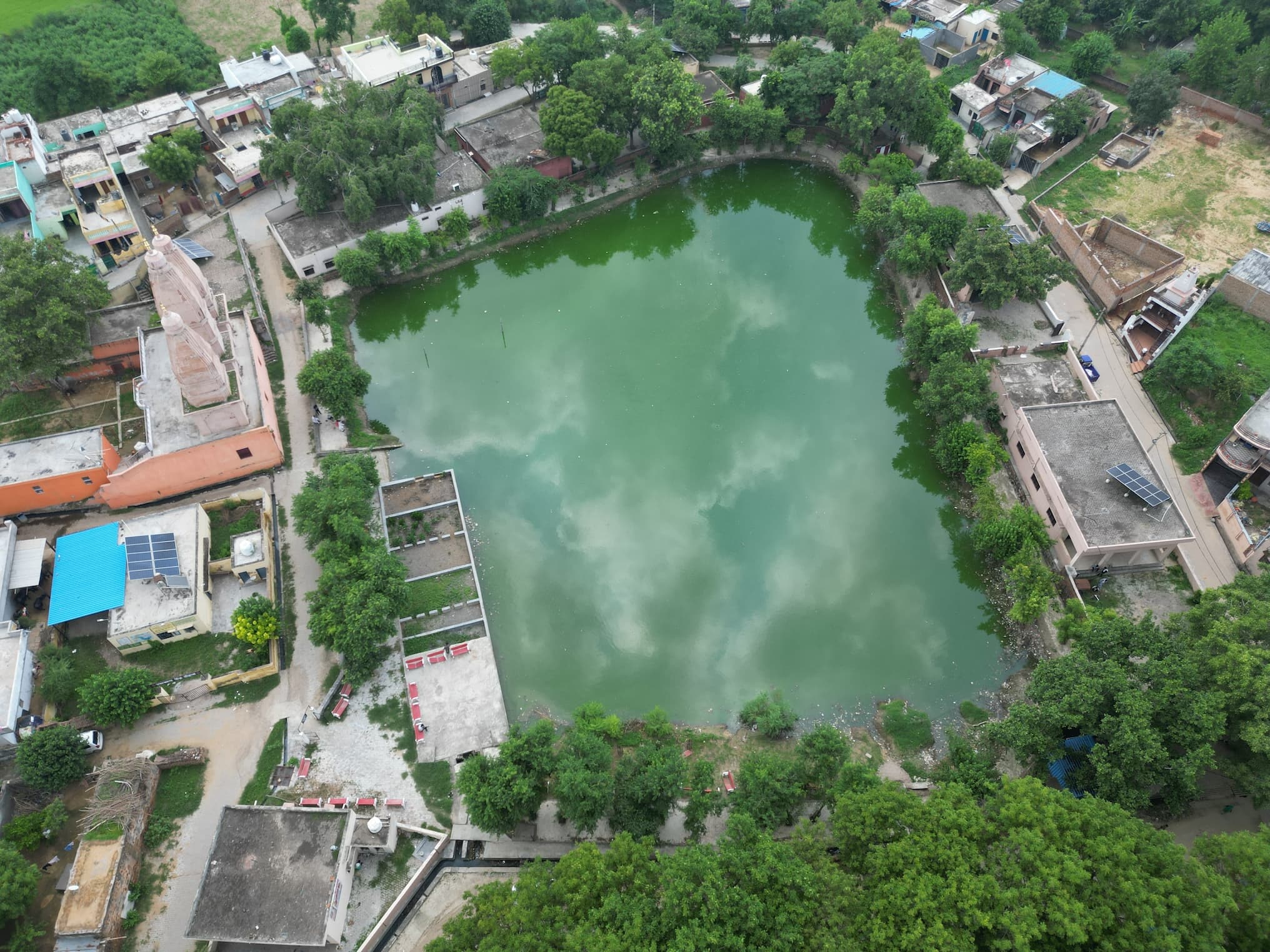
Aerial drone view
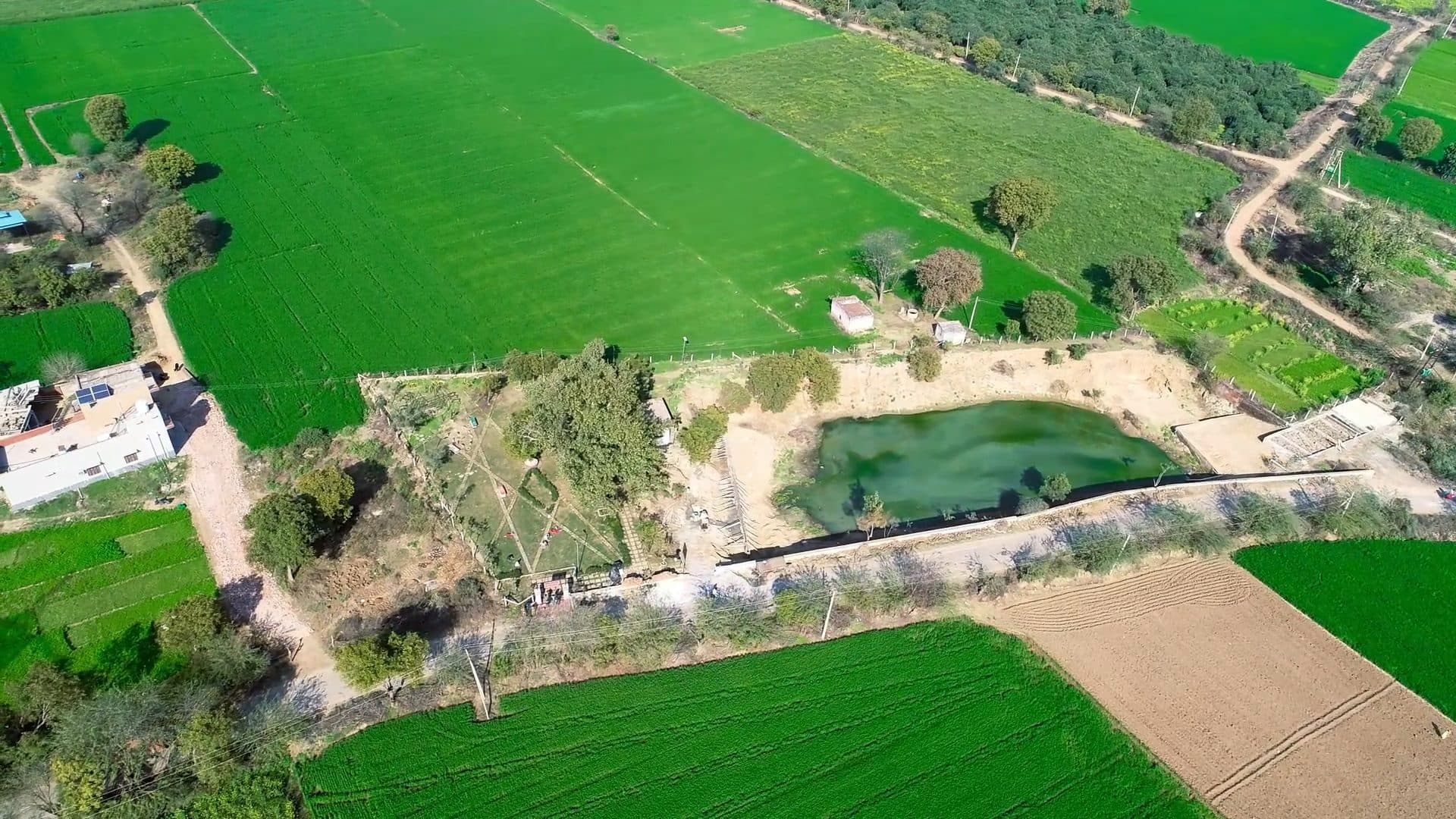
Pre-restoration site assessment of the pond and its catchment
The site
A 1.2-acre pond at the heart of Maujabad
Maujabad village sits in the Pataudi Block of Gurugram district, Haryana, with the project pond located at 28.302975°N latitude and 76.689506°E longitude. Spanning approximately 1.2 acres, the pond is a vital feature of the village landscape and a lifeline for the surrounding rural community.
As a key water body for the panchayat, the pond historically supported livestock, biodiversity and groundwater recharge for nearby farms. Restoring it is as much a hydrological intervention as it is a cultural one — reconnecting the community with a space its older generation grew up with.
Site at a glance
- Village
- Maujabad
- Gram Panchayat
- Maujabad
- Block
- Pataudi
- District
- Gurugram
- State
- Haryana
- Coordinates
- 28.302975°N, 76.689506°E
The need
An ecological collapse demanding urgent, integrated action
The site assessment revealed that rainwater and wastewater from adjacent villages flowed directly into the pond. Solid waste accumulation, monsoon agricultural runoff and untreated sewage drove severe pollution and accelerated eutrophication.
Aquatic weeds had taken over the surface, choking light and oxygen. The pond — once a lifeline for the surrounding rural community — could no longer recharge the aquifer, support biodiversity or serve as a usable village asset. Without intervention, the loss would have been permanent.
The community's response was striking: alongside the ₹31.33 lakh government allocation, residents themselves raised ₹6 lakhs through crowdfunding — putting their own money on the table to revive the pond.
Aims & objectives
Mitigate, restore, engage, sustain
- Mitigate pollutant influx — wastewater discharge, agricultural runoff and solid waste dumping at the pond periphery.
- Restore ecological health and biodiversity through nature-based wastewater treatment and native plantation.
- Foster community participation through awareness campaigns, painting drives and shared ownership rituals.
- Establish sustainable long-term management practices anchored in panchayat-led O&M and real-time monitoring.
Technical interventions
Four core activities, engineered around a phytorid treatment core
Each intervention works in concert — divert and treat wastewater, restore the pond bed, stabilise the slopes, and wrap the restored asset in landscaping the community wants to spend time around.
- Step 01
Dewatering, Desilting & Slope Stabilisation
Complete water removal and silt elimination to prepare the pond bed, followed by reinforced slope stabilisation to enhance water retention and prevent erosion.
- Step 02
100 KLD Phytorid WWTP & Pipeline
A 100 KLD Wastewater Treatment Plant using phytorid technology, with supporting pipeline infrastructure to intercept and treat sewage before it enters the pond.
- Step 03
Landscaping & Plantation
Comprehensive environmental design — turfing, brick trails, herbal gardens and native plantation — creating a green community space around the restored pond.
- Step 04
Infrastructure & Amenities
RCC retaining walls, paved areas, entrance gates, fencing, children's play areas, street lighting and an AWLR (Automatic Water Level Recorder) for monitoring.
Technology spotlight
Phytorid treatment — wastewater, treated by plants
Following thorough deliberation and comprehensive pre-feasibility studies, Maujabad adopted phytorid treatment — an ecological, sustainable approach to wastewater management grounded in natural processes.
Phytorid systems use engineered wetlands populated with specific aquatic and emergent plant species that absorb nutrients, break down organic matter, and biologically polish wastewater to a quality safe for groundwater recharge. Energy costs are minimal, mechanical parts are few, and the system blends visually into the landscape.
At 100 KLD capacity, the Maujabad phytorid plant intercepts sewage before it reaches the pond — protecting the restored water body and converting a daily pollutant load into a recharge resource.
Why phytorid
Nature-based
Plants and microbial communities do the treatment work — no chemicals required.
Low energy
Gravity-fed flow with minimal mechanical components — fits a village O&M budget.
Landscape-friendly
Reads as a green wetland, not an industrial installation.
Recharge-ready
Polished effluent feeds the pond and the aquifer instead of polluting them.
Information, education & communication
A community that paid in cash, time and care
Maujabad is unusual — the village itself raised ₹6 lakhs of crowdfunding alongside the government grant. The IEC programme built on that energy with painting, plantation and participatory governance.
- 01
Community Crowdfunding
Residents of Maujabad raised ₹6 lakhs themselves — putting their own money behind the pond and signalling shared ownership from day one.
- 02
Mural Painting Drives
Community members painted vibrant murals on the walls surrounding the pond — transforming the perimeter into a public art space.
- 03
Plantation Drives
Hands-on plantation activities introduced native species, herbal gardens and shade trees — a green ring around the restored pond.
- 04
Awareness Campaigns
IEC sessions on wastewater management, groundwater depletion and the pond's role as a community asset for generations to come.
- 05
Pond Committee Formation
A local pond committee, anchored by the gram panchayat, takes responsibility for long-term operations, maintenance and monthly clean-up drives.
- 06
Collective Ownership Rituals
From the stone-laying to the first plantation, the project leaned on public moments that converted spectators into stewards.
When a village puts ₹6 lakhs of its own money on the table for a pond, restoration stops being a project — it becomes a shared commitment to the next generation.
Visual vignettes
See the restoration in motion
Three short clips from the Maujabad site — the phytorid treatment plant, the construction journey, and the painting and plantation drive that brought the community into the project. Each clip plays automatically when it scrolls into view.
Phytorid wastewater treatment
A phytorid wetland treats sewage before it enters the pond.
A 100 KLD phytorid plant intercepts sewage before it reaches the pond — an engineered wetland populated with plant species that absorb nutrients, break down organic matter and biologically polish wastewater to a quality safe for groundwater recharge.
Construction phase
Dewatering, desilting and slope stabilisation prepare the bed.
Complete water removal and silt elimination prepare the pond bed for restoration, followed by reinforced slope stabilisation to enhance water retention and prevent erosion — the engineering foundation for the entire intervention.
Painting & plantation drive
Murals and native species bring the perimeter back to life.
Maujabad residents painted vibrant murals on the walls surrounding the pond and joined hands-on plantation drives — turning the perimeter into a public art space and a green ring around the restored water body.
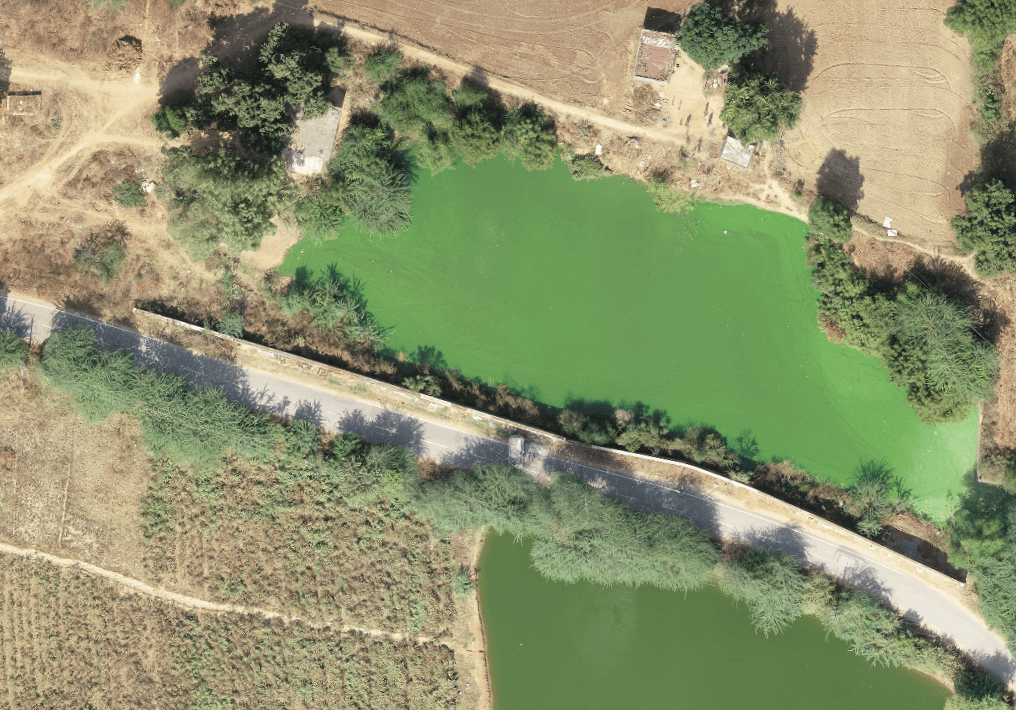 BeforeAfter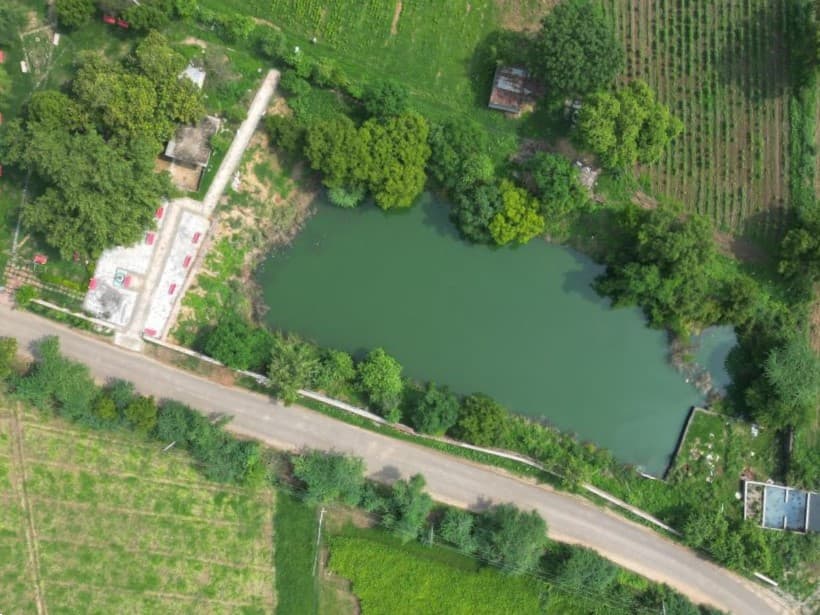
Potential impact
Ecological revival, hydrological gains and community ownership
The total investment of ₹37.33 lakhs represents both government commitment and community solidarity — converting a polluted water body into a thriving asset that serves Maujabad for generations.
- Wastewater treated daily100KLD
Phytorid plant intercepts and polishes sewage before it can reach the pond — protecting both the water body and the aquifer.
- Pond surface restored1.2acres
Full pond area dewatered, desilted and re-engineered — with stabilised slopes and embankments for long-term resilience.
- Community crowdfunding₹6lakhs
Maujabad residents raised their own contribution alongside the ₹31.33-lakh government grant — converting the pond into a shared asset.
Help us restore the next pond
Every pond restored is a community made water secure
Support GuruJal's mission to make India water neutral — one village, one pond at a time.